I have always been big on sustainability and ethical consumerism; 17-year-old me was at the car boot every weekend, making secondhand shopping the largest portion of my wardrobe all throughout my adolescence.
In my opinion, COVID was when eco-consciousness and sustainability really blew up in the fashion space; an uprising around making your own clothes, repairing clothes, and leaning towards more environmentally friendly alternatives was evident. However, with the rise of far-right propaganda and thinking, sustainability (much like many crucial concepts) seems to have taken a back burner. The pressure to remove sustainable initiatives is increasing, particularly with backlash from US-conservative politicians towards ESG initiatives, reframing them as controversial rather than essential. While many companies may still be ploughing out sustainable alternatives, and many smaller brands are still opening up, I have been thinking a lot about whether these larger corporations are actually authentic and genuine with their efforts, or whether much of this movement has been reduced to greenwashing, and labelling things as sustainable to consumers who are extremely fatigued. And furthermore, how far the rise of far-right politics is pushing us back.
It is no secret that the world is becoming an increasingly more volatile and tumultuous place, with the war in Iran placing new pressures on an already recovering industry. India has seen a rise of raw material costs by 20-25%, with nearly 60% of textile production being reliant on petroleum, these conflicts have direct impacts on the costs and production of textiles globally. However, at a time where global conflicts, environmental pressures, and prices are at a (seemingly) all time high, brands are remaining fairly quiet.
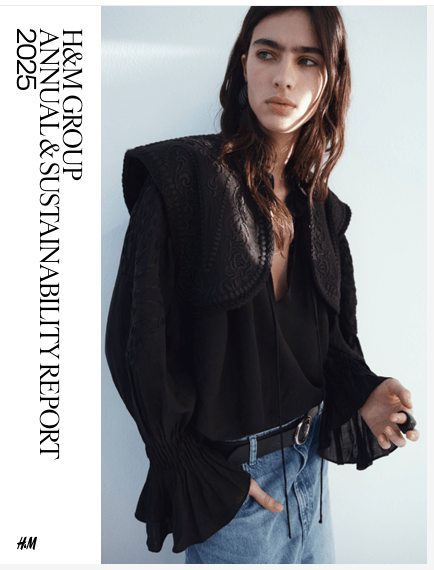
Despite all this, H&M released their annual Sustainability report in March with plenty of marketing surrounding it. Along with ambitions to reduce their carbon emissions further than the around 30% they have already achieved, H&M detail how they want to move into streamlining resale offerings, and long-lasting designs. However, the general feeling seems to me to be offering easier sustainable alternatives, simplifying their solutions based on what consumers want. Now, whether or not this is a positive is not the first thought that comes to mind for me, what instantly comes to mind is: why are brands making sustainability seem so simple?
The answer to this question, in my opinion, is all to do with consumer fatigue. There are a few main layers to this fatigue consumers (or just us as people in general) are feeling: an information overload, emotional burnout, and choice paralysis.
As consumers today, we are navigating an overwhelming landscape. Sustainability messaging is everywhere; on product labels, in marketing campaigns, clothes tags, social media videos. Consumers who aren’t in the fashion space, or don’t know much about textiles won’t understand how recycled cotton is only one step towards actual sustainable alternatives, and don’t have the time or energy to understand.
On top of this, news articles about a confusing and volatile geopolitical landscape continue appearing. Not only does this cause people to revert to affordability and ease over ethics, these global conflicts are pushing prices for practically everything higher, so do consumers really have the extra money to invest into strong sustainable options? No.
And finally, clothes are everywhere. There is so much overlap with styles, brands, marketing campaigns and that can feel extremely hard to navigate. Spending hours searching through clothes to find the best option just isn’t feasible, and quite frankly where would people start. Furthermore, when everything is marked as sustainable, or 50% recycled, the meaning can be taken away and diluted.
H&M’s sustainability report is evidence of all of these factors, sustainability is being simplified into something more digestible for consumers. By reducing sustainability into easily recognisable signals, brands can remove the friction from the purchasing process. This in turn offers reassurance to consumers, without the requirement for further investigation. This is where, in my opinion, the line between genuine progress and green washing becomes increasingly blurred.
For example, a product made with recycled cotton may still be a part of a wider system defined by overproduction, and questionable labour practises. A resale platform or charity shop may extend the life of the garment, but doesn’t address or alter the volume in which brands are producing and creating new garments. While the initiatives themselves are not meaningless, they are only partial solutions in an extremely broken fast-fashion system.
I want to emphasise that i do not think these sustainability efforts are disingenuous. Many brands are making real steps and changes. Resale models are increasing, interesting in repair services are rising and alternative materials are continuously being created. And I do believe that even small, partial solutions are better than none.
Brands exist within a very difficult tension between profitability, and sustainability. And, to be frank, within the system created around us there is little benefit for a brands profits to be highly sustainable (bigger questions of whether true sustainability can exist within product creation and selling within capitalism are not forgotten here). Similarly, brands will most likely be feeling pressure to tread lightly due to the political pressures of today.
So, are we moving forwards, backwards, or standing still? While I definitely do not have the answer to this question, my guess would be somewhere a little ahead of standing still. Sustainability hasn’t vanished, it is just shaped by consumer fatigue and politics. The challenge now is not only to continue pushing for progress, but to resist the urge to accept simplicity at face value.
Because if sustainability is to mean anything at all, it must be more than just easy.
Links: https://www.fashionforgood.com/
https://hmgroup.com/sustainability/sustainability-reporting

