From Exploitation to Education: Learning Manchester’s Fabric Story

This post is going to be different to the content I have been producing recently, but it is important to hold myself and my ignorance accountable, and make it my priority to educate myself. Before I begin, as a white person studying and working within textiles, I recognise that I benefit from the same structures that have historically marginalised others. The privilege of being able to learn this history, rather than live its consequences, isn’t lost on me. It’s a reminder that accountability starts with acknowledging where I stand.

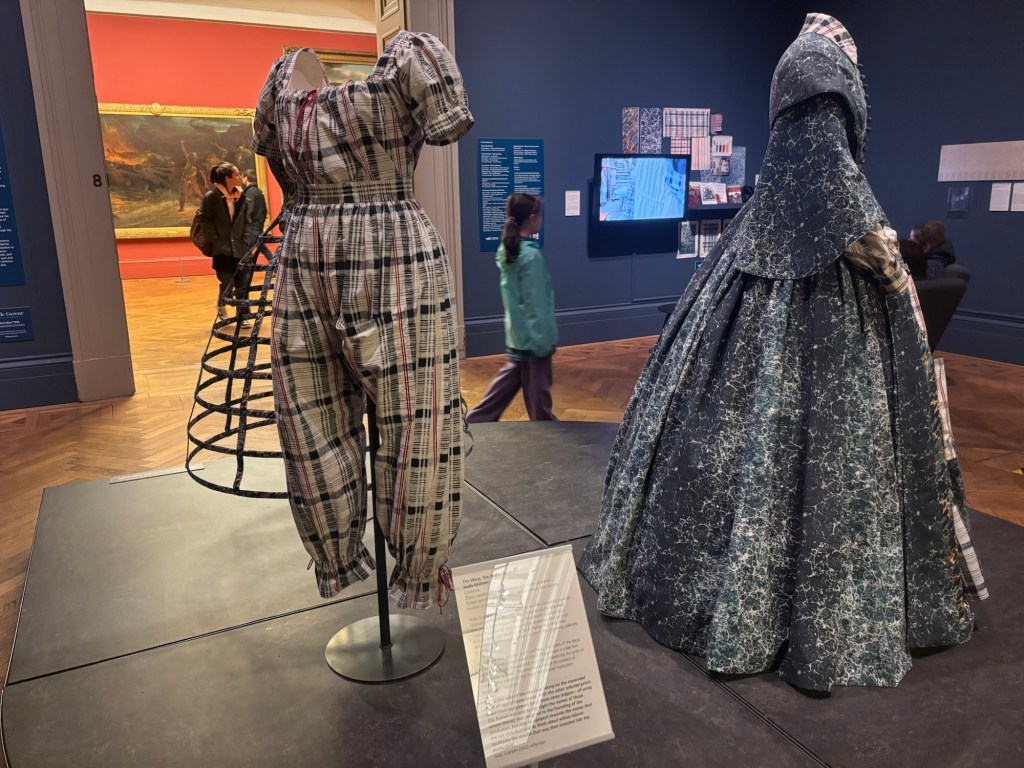
The start of this blog post is at Manchester Art Gallery. I was in my third room and came across The Warp/The Weft/The Wake by Holly Graham, a London-based artist in residence (an incredibly talented artist from whom I am extremely grateful to have learned so much). As someone who’s been studying textiles and living in this city for two years, I thought I already understood Manchester’s fabric story: the mills, the cotton, the industry. But this exhibition revealed a side I hadn’t fully considered: the trade between cheap cloth and goods, and the hidden human costs woven into those materials. I began to feel extremely ignorant. In this area, I boast my knowledge and years of study, and yet I have received only half of the story. And an extremely whitewashed version at that.

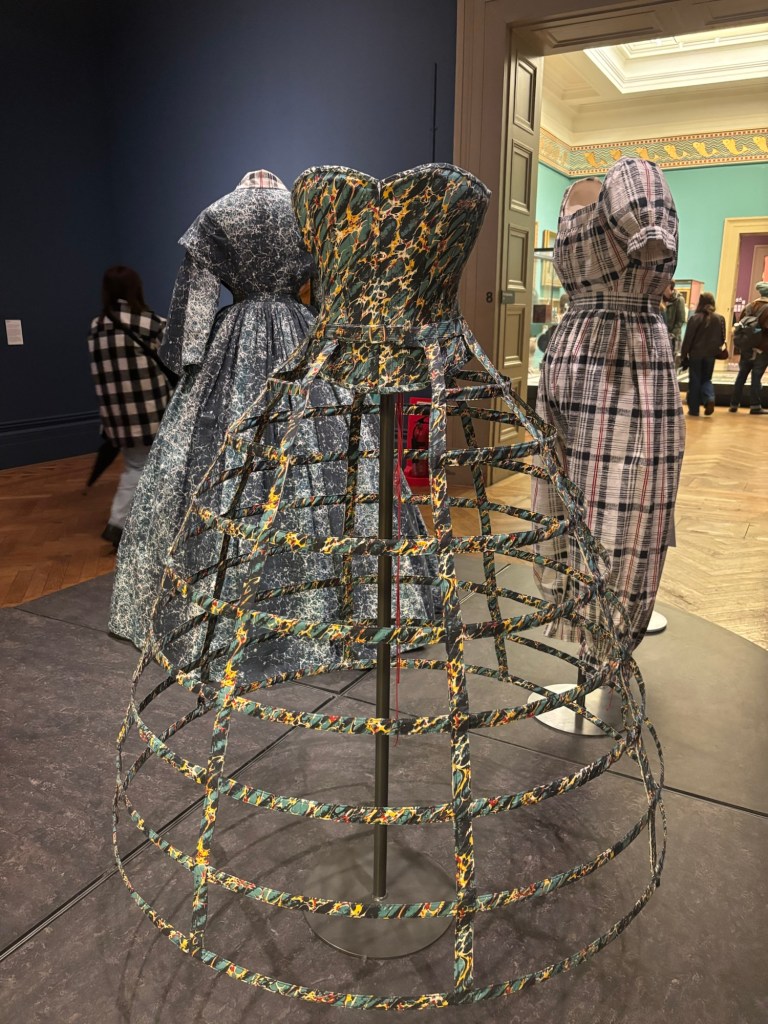
Corset and Petticoat. Screen printed on woven cotton, steel boning, cotton thread, mother of pearl. Holly Graham, 2024

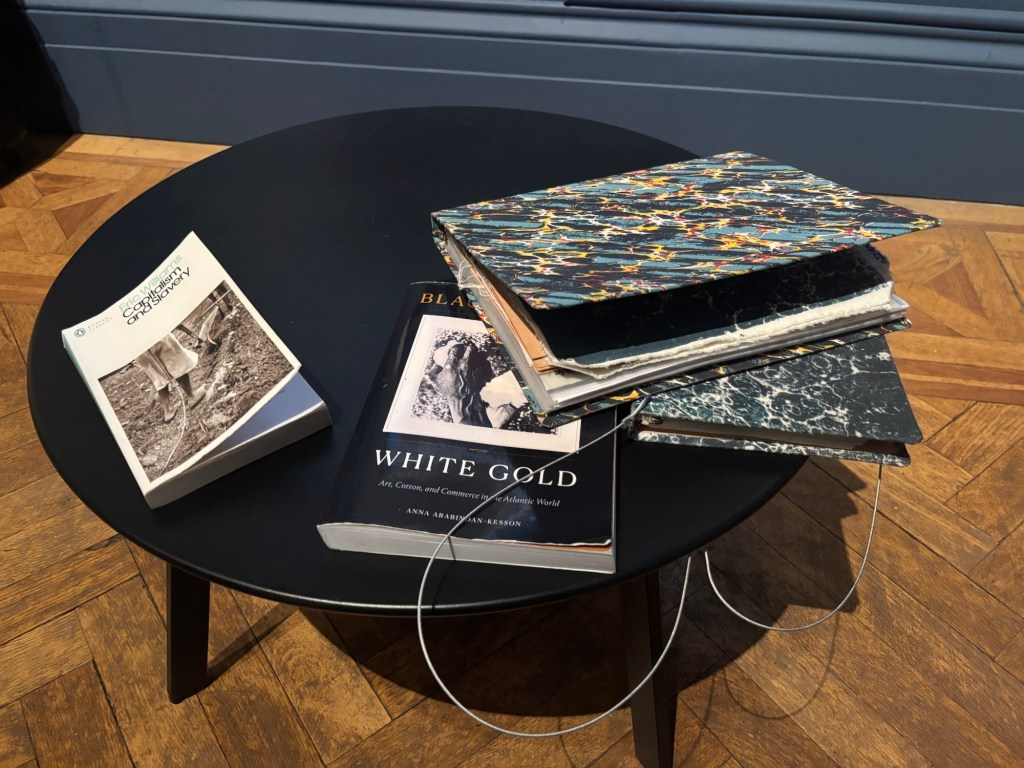
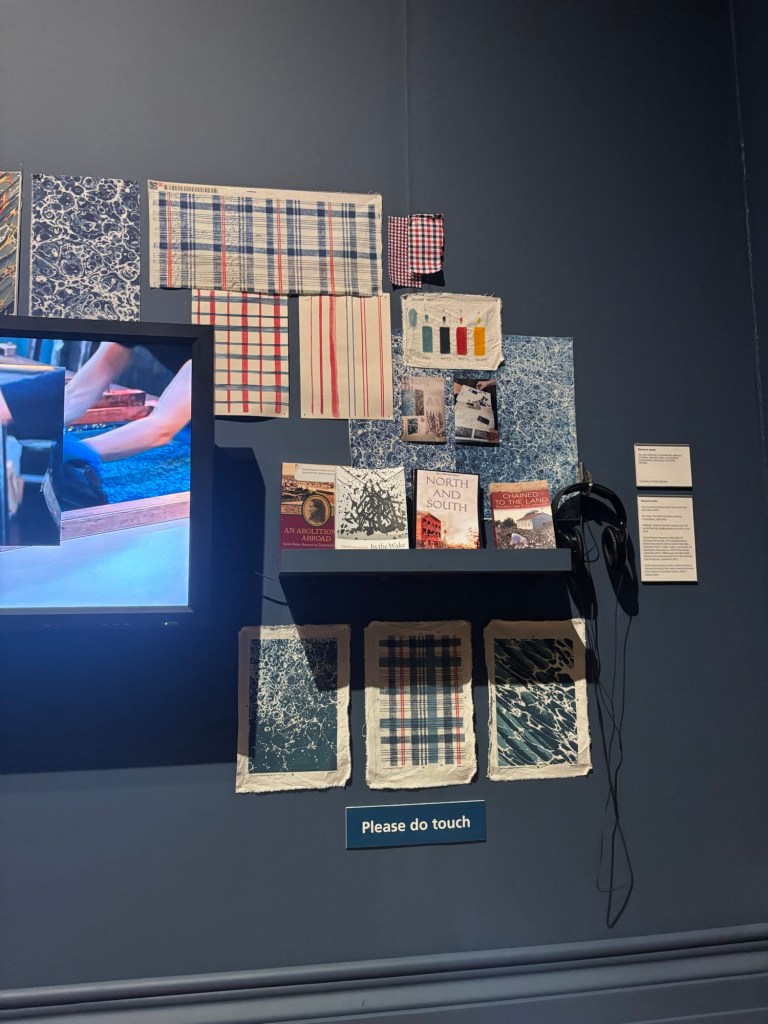
With my upcoming research project (my degree’s version of a dissertation), and with this being an area that I felt compelled to learn more about, I knew I had to dig deeper. What I did know was that the cotton used in the mills was grown on the backs of exploited enslaved African people. But that’s where it stopped. So I took photos of the books left as reference in the exhibit, and started to read.

Books and Sample sketchbook

I turned to google and Manchester Science and Industry museum’s website first. And even a quick browse opened my eyes, and I wondered why on earth my tutors and previous teachers had never spoken about this? My entire education, almost 7 years of fashion and textile studies and yet I didn’t know some fundamental aspects of not only textiles, but the Industrial Revolution as a whole.

Cotton textiles were in high demand on the Western coast of Africa, where European slave traders bought Indian cotton goods and traded them for enslaved people. This demand played a key role in the early development of Manchester’s textile industry. Even as Indian textiles remained part of global trade, British slave traders began relying on Manchester-made cotton goods, imitations of Indian designs, to fuel their exchanges. Loaded onto ships in Liverpool, these fabrics were carried to the west coast of Africa and traded for captured African people. In 1788, Manchester’s textile exports to Africa were worth about £200,000, or roughly £24 million in today’s money, a figure that reveals just how deeply the city’s prosperity was tied to this system. The abolition of the British Slave trade in 1807 wasn’t the end of the merchants’ involvement, however. These merchants and manufacturers continued supplying goods to Spanish and Portuguese slave traders for decades more.

After decades of exploitation and the financial growth on the back of enslaved people’s labour, 2000 Mancunians signed a petition in support of the Foreign Slave Trade Abolition Bill in 1806. It is a confronting experience, learning about how the city I live in was involved so heavily in the rise and abolition of the Transatlantic slave trade. Information I believe to be highly valuable, and will continue to research further. In the time I took to read and write this blog post, I haven’t fully read the books left at the exhibit; however, I am interested in doing an updated piece with my learnings from those.

Undergarments and Dress. Screen printed on woven cotton, steel boning, cotton thread, mother of pearl. Holly Graham, 2024

This post only scrapes the surface of what else there is to learn, but with my research project fast approaching I felt it was apt to at least try and find out more in my free time. It’s uncomfortable to recognise how my own education and practice, in an industry still reliant on cheap labour, continues to be built on these same foundations of exploitation. It makes me question what it means to study or create within textiles today, knowing that this history is not just in the past but continues in different forms. It’s easy to treat this as history, but the threads of exploitation haven’t disappeared; they’ve just shifted geographies. The fast fashion supply chains of today mirror those same power imbalances, where the Global South continues to bear the burden of cheap production for Western consumption.

I feel in a very privileged position, to have this level of education, and such a wide range of opportunities waiting for me at the other end. As my education continues, both internally and externally from my degree, I begin to question exactly what position I would like to hold in this industry when that other end comes, and what personal impact I would like to have. My next step is to trace how these colonial textile trades have shaped not only industrial Manchester but also the visual and material culture we associate with ‘British design.’ I want to understand how art, fashion, and museums can acknowledge this history without reproducing it.

If anyone reading this has resources or research suggestions, especially work by Black or postcolonial scholars in textile history, I’d love to hear them. Part of this learning is unlearning, and that’s something I want to do collaboratively. I’m grateful to exhibitions like The Warp/The Weft/The Wake for confronting these silences. They remind me that learning isn’t just about acquiring knowledge, it’s about being willing to unpick the threads of what we think we know.

References: https://www.scienceandindustrymuseum.org.uk/objects-and-stories/manchester-cotton-and-slavery , https://www.visitmanchester.com/ideas-and-inspiration/blog/post/manchester-cotton-and-transatlantic-slavery/ , https://manchesterartgallery.org/event/holly-graham/

5 days of outfits: Uni, work and everything in between

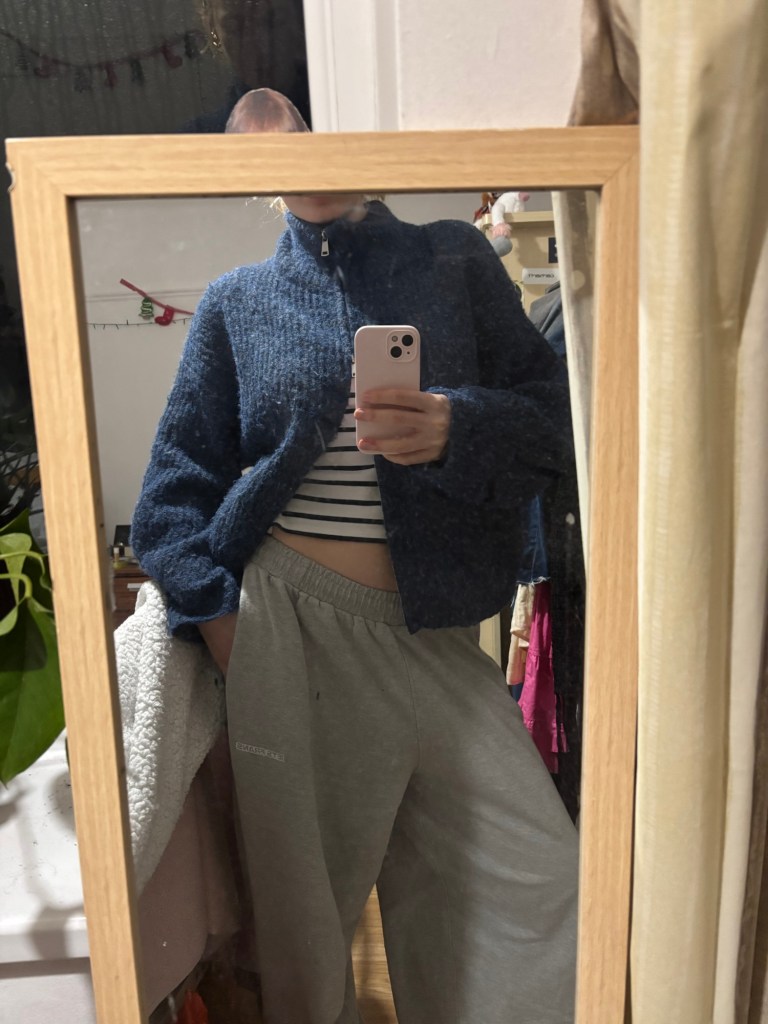
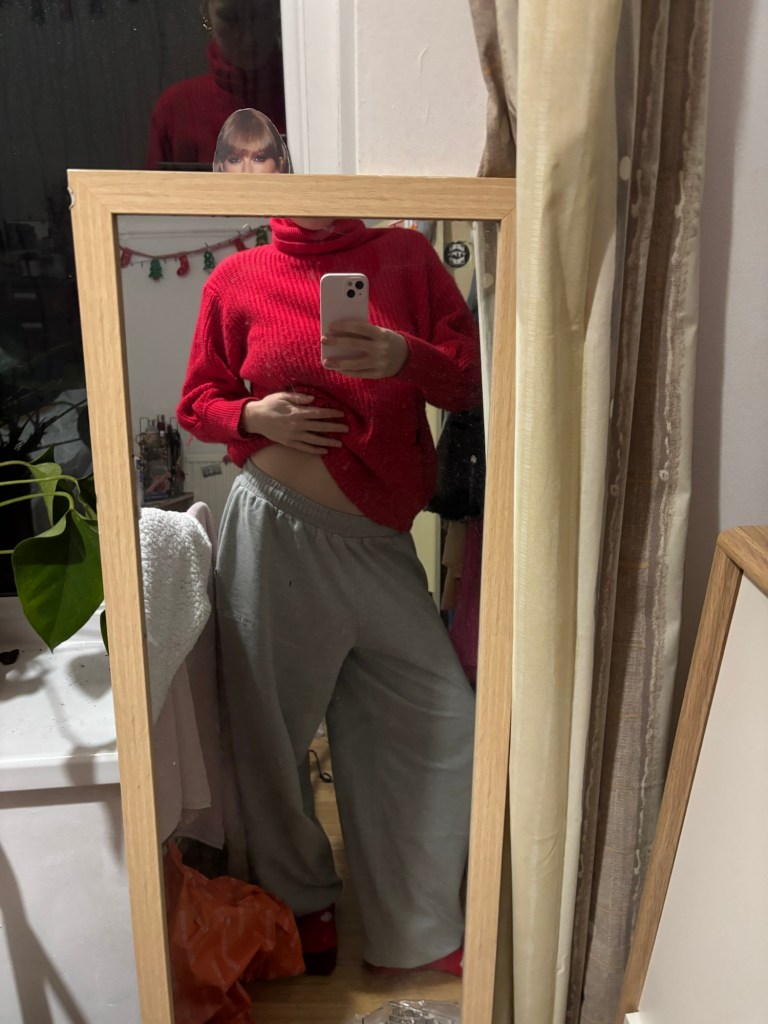
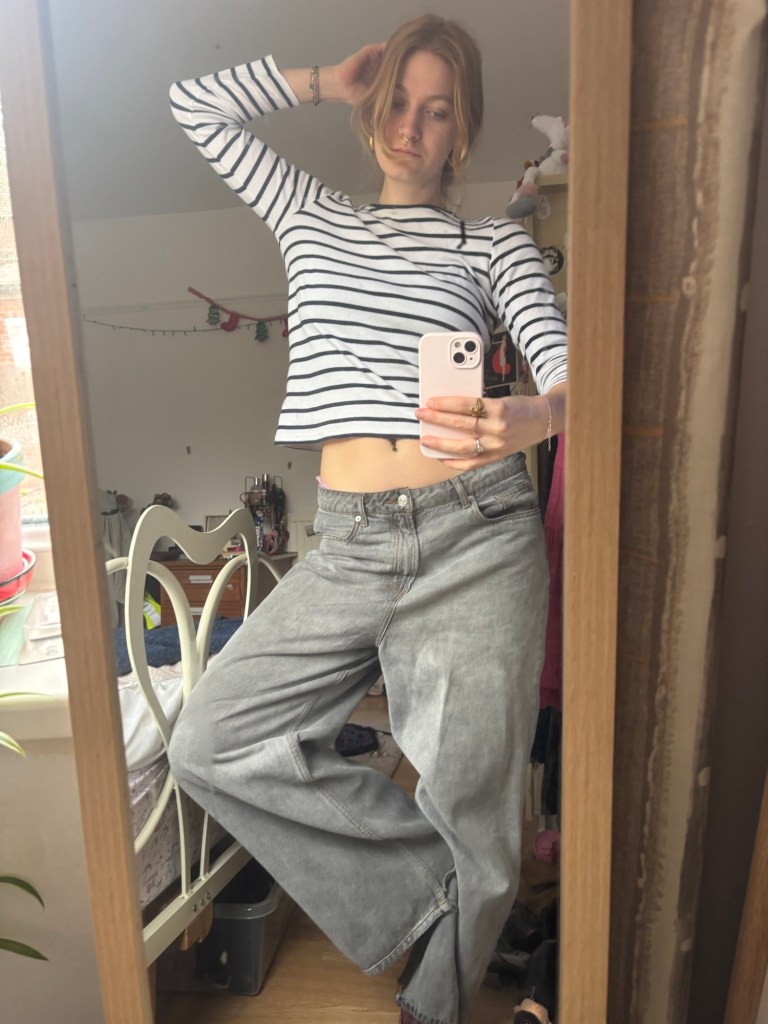
As I settle into my final year at uni, I’ve been thinking more about how I dress day to day. Fashion is such a big part of my studies, but as I wrote in my previous post, in real life it can be hard to balance comfort, budget, and self-expression..

So, for this week I’ve decided to document my week in outfits: the good, the comfy, and even the work uniforms that leave little room for creativity

Day 1: Work

I kicked off the week with a double shift. This meant a day in my bright pink work t-shirt and my go-to comfy and baggy jeans. I wore my work hoodie and a scarf as the day got colder. It wasn’t the most stylish start to the week, but it’s real life and days like this make me appreciate when I can dress for myself.

Day 2: Uni Lecture

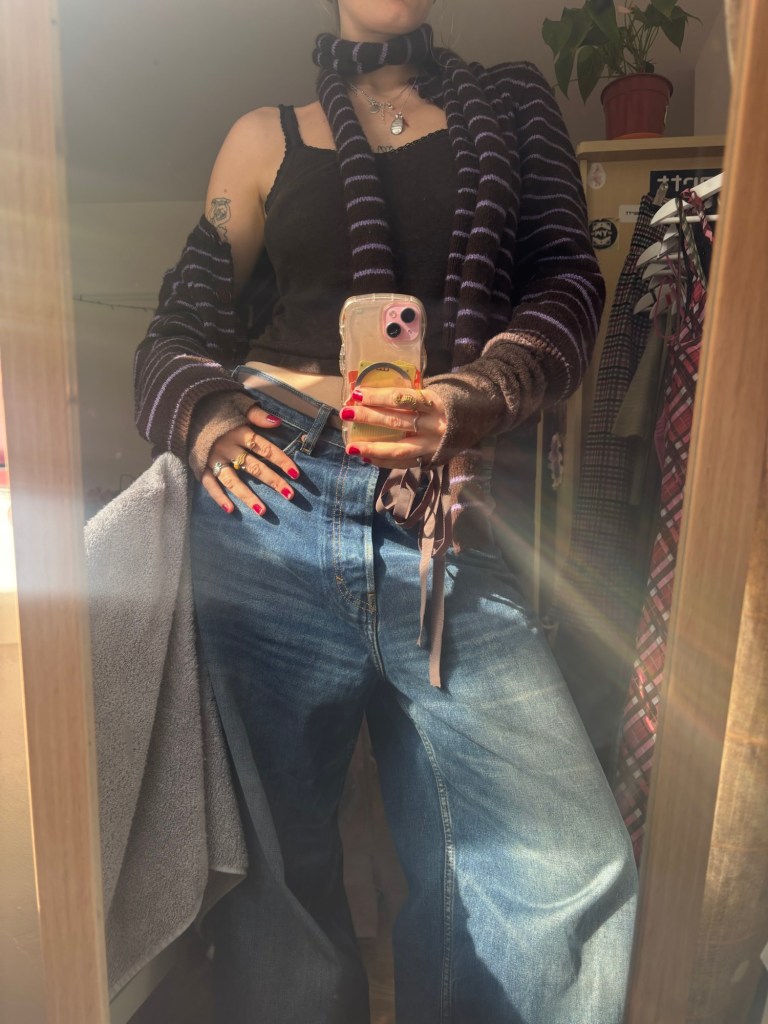
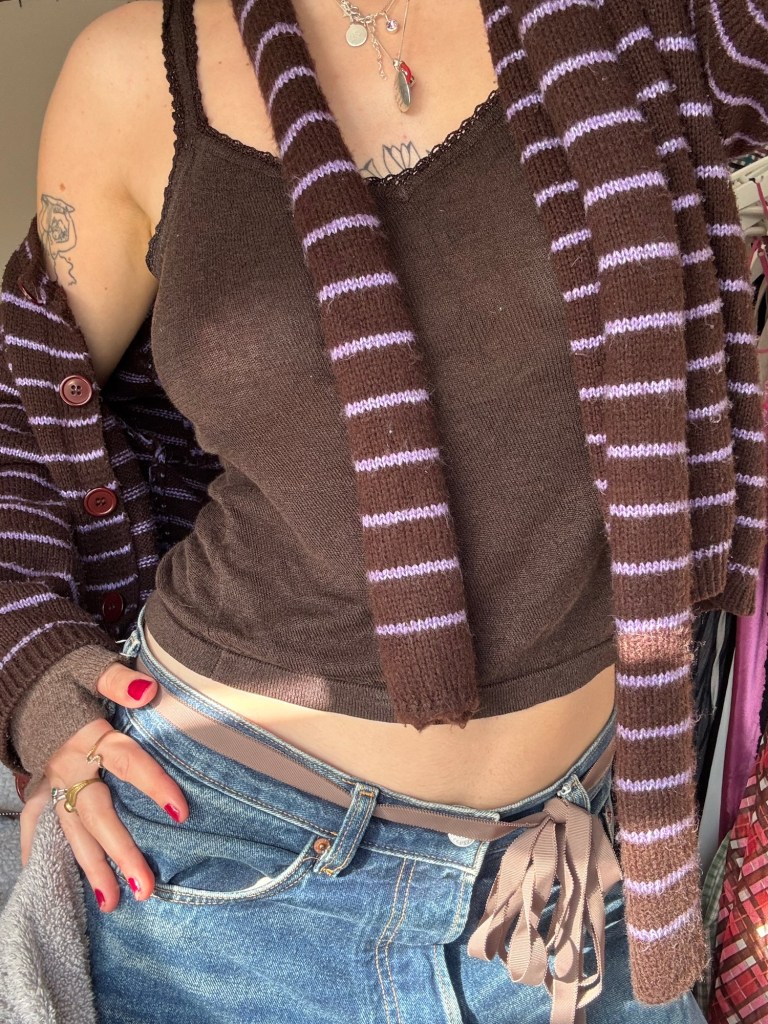
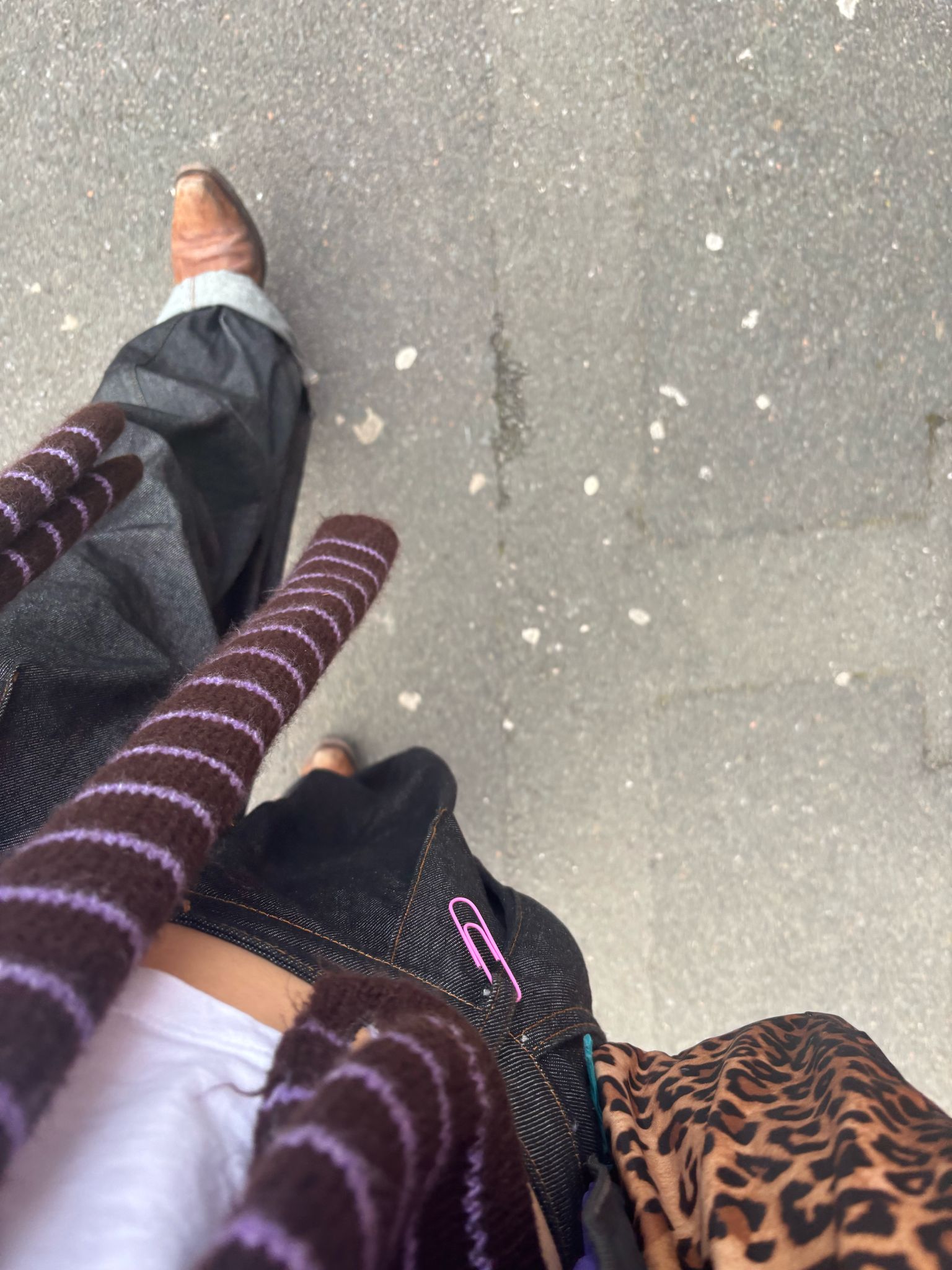
The aim for this look was comfy, simple and easy. Jeans are my default, so my trusty weekday Astros made an appearance. I initially pulled on a black long sleeve and red knit jumper, however quickly felt I wanted to choose something a bit more interesting. I grabbed a brown tank top, and immediately reached for my favourite brown and purple cardigan. Pairing this with its matching scarf, and my brown fingerless gloves. As I’ve recently been cycling to university, this was a perfect level of layers in the autumn weather.

Day 3: lazy day at home

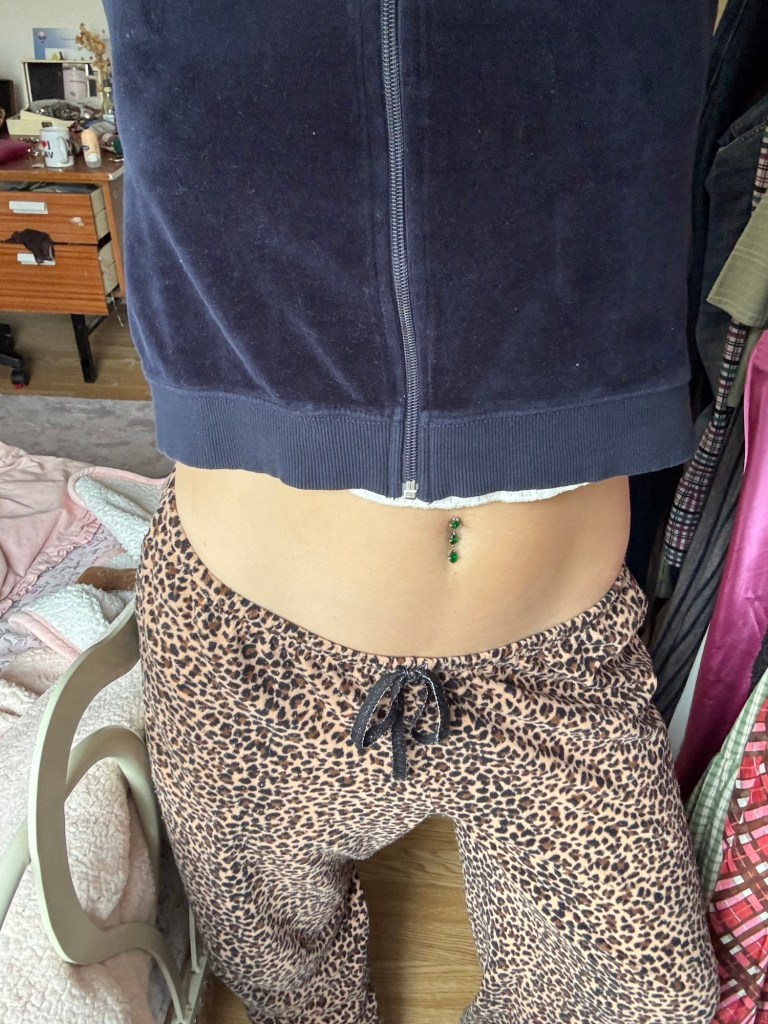
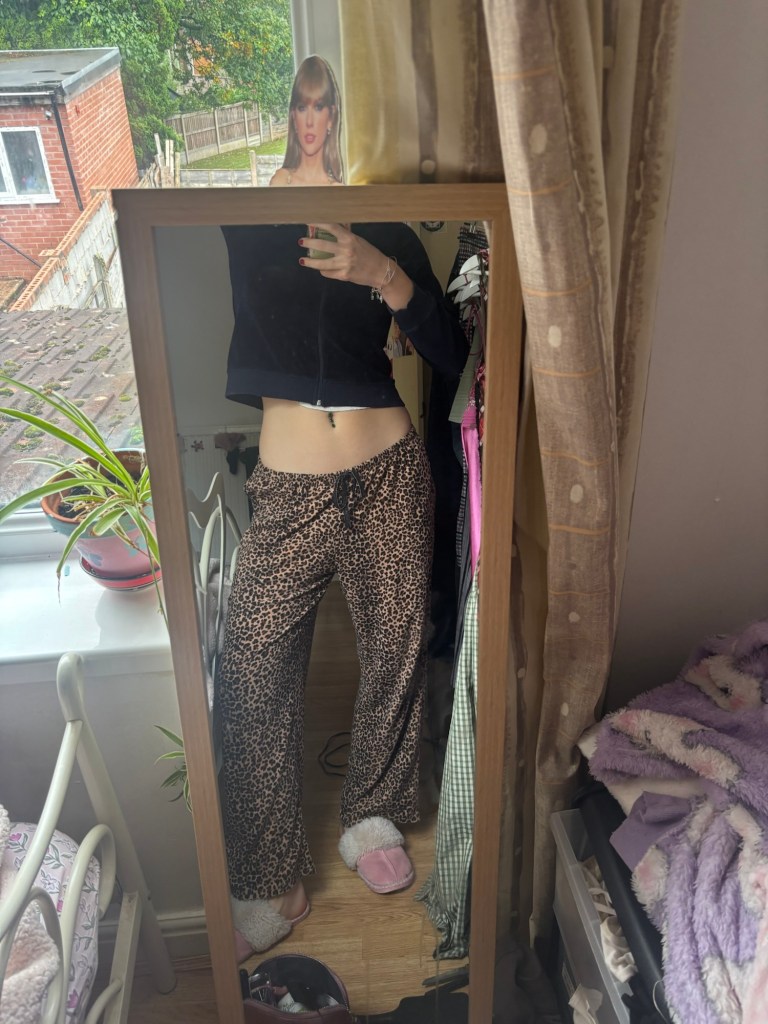
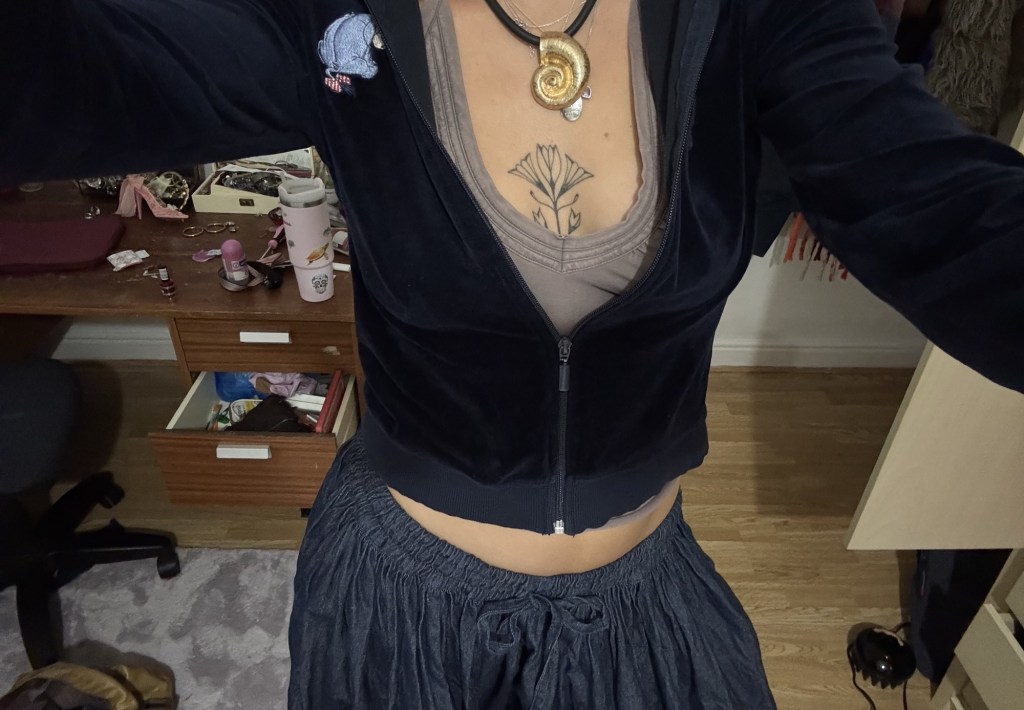
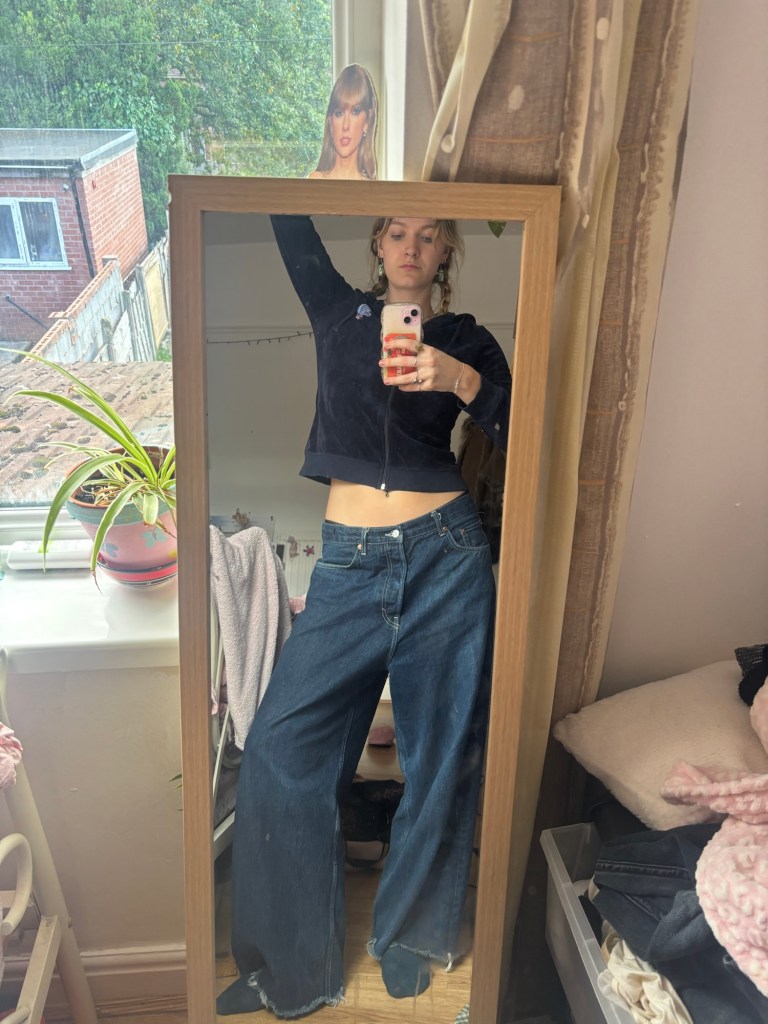
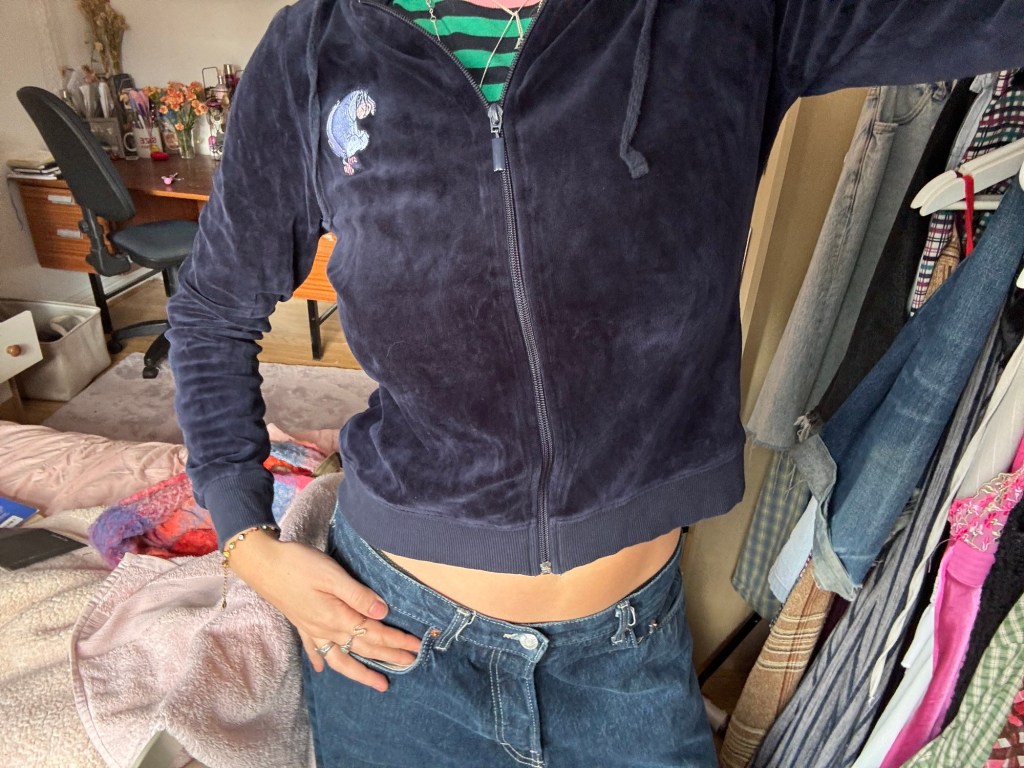
Wednesdays are my days off uni, so I decided to stay comfy. It was a day of admin, so I opted to stay in my favourite leopard print pyjama bottoms, and my new vintage Disney velour hoodie. It’s soft, playful and made a slightly boring day feel a bit more fun.

Impromptu pub trip:

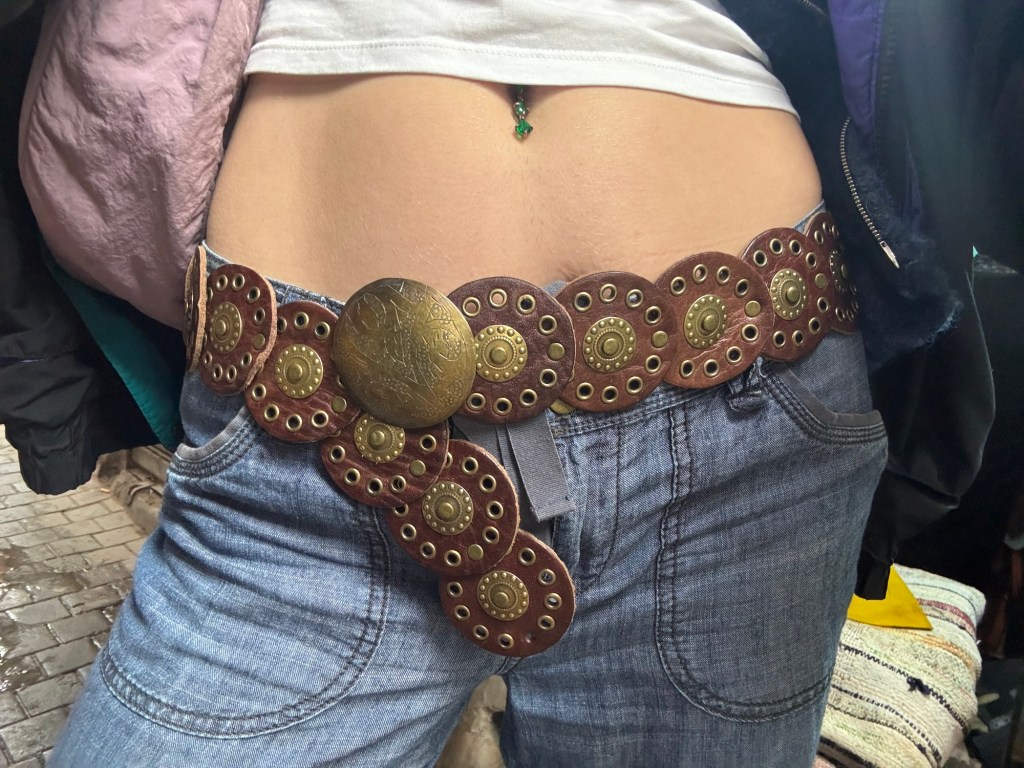
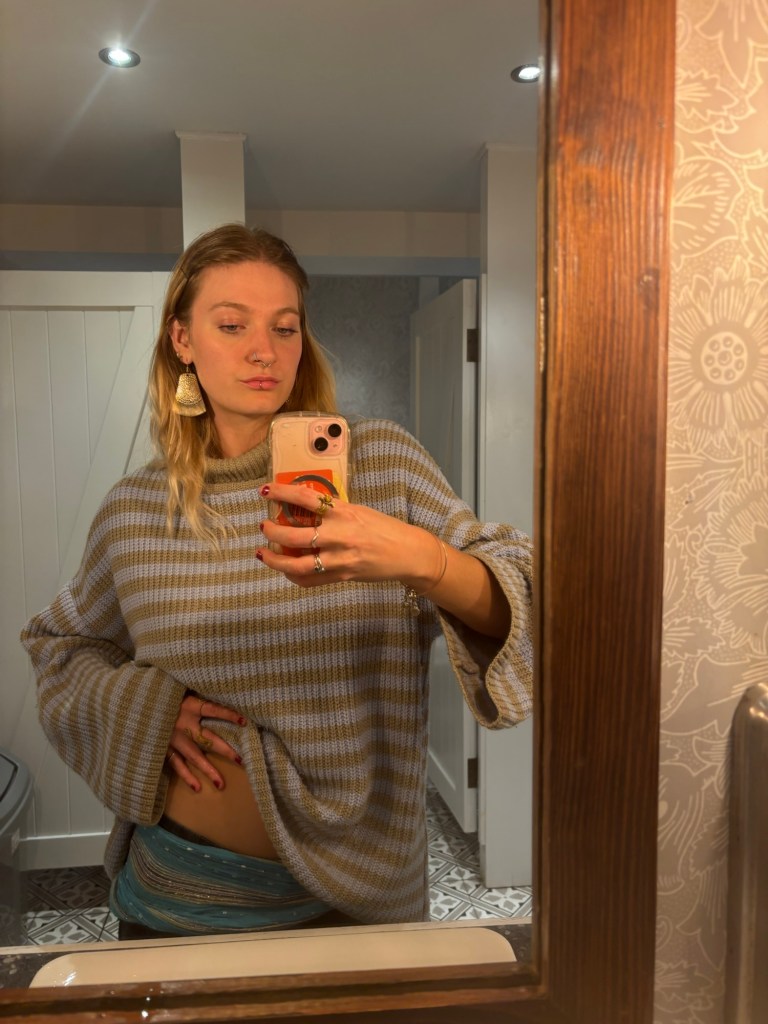
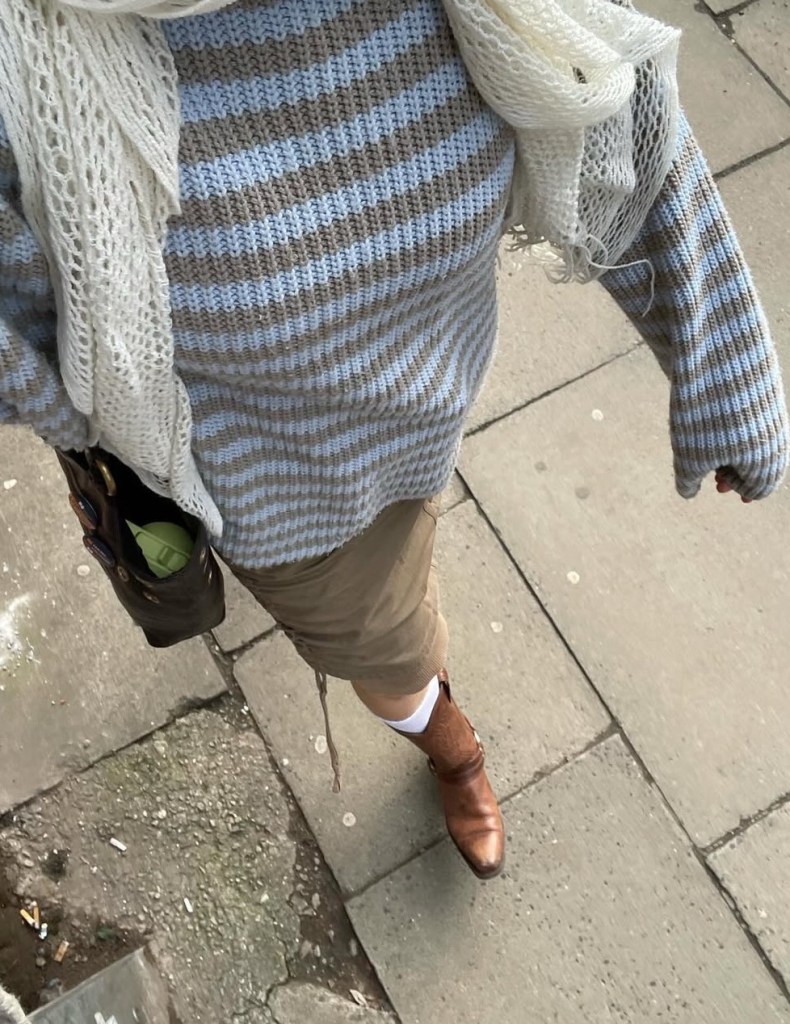
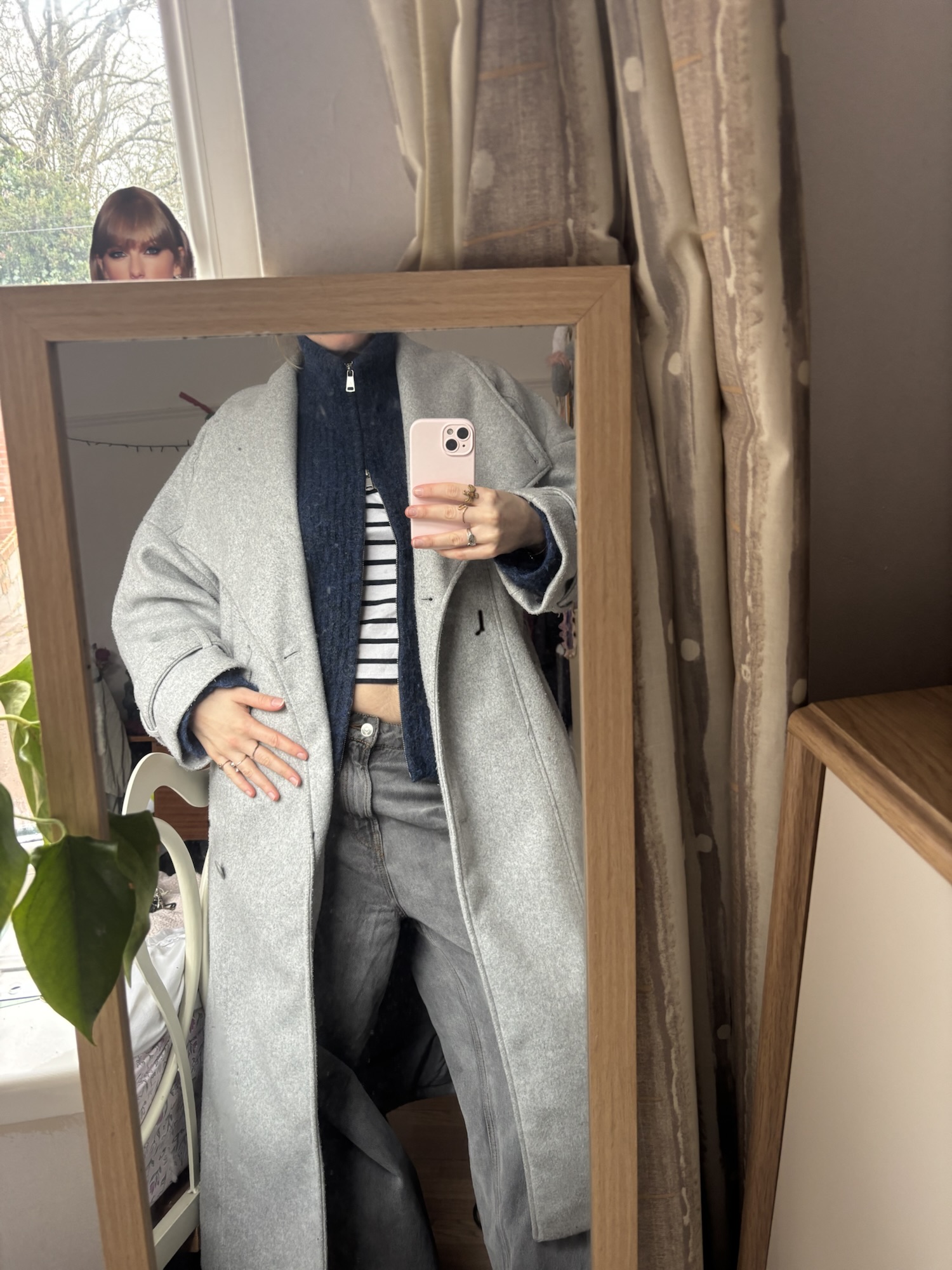
I brought out the scarf as belt combo I trialled last week, pairing it with a baggy striped jumper. I wanted comfy and casual but something that made me feel good wearing, and this was exactly that.

Midweek reflection: ✨ Even though the week started with uninspiring workwear, playing with layers and rediscovering old favourites has already made me more excited about getting dressed again. Having said that, being a fashion student I feel the pressure to wear the best and most creative outfits everyday, but life just isn’t always like that. I have a very different personal style to most of the people on my course, something that at times has left me feeling a bit self conscious. The aim of this blog post is to show that clothes while yes, they are fun and expressive; it’s also completely okay for them to be simple and practical.

Day 4: Uni and society social night

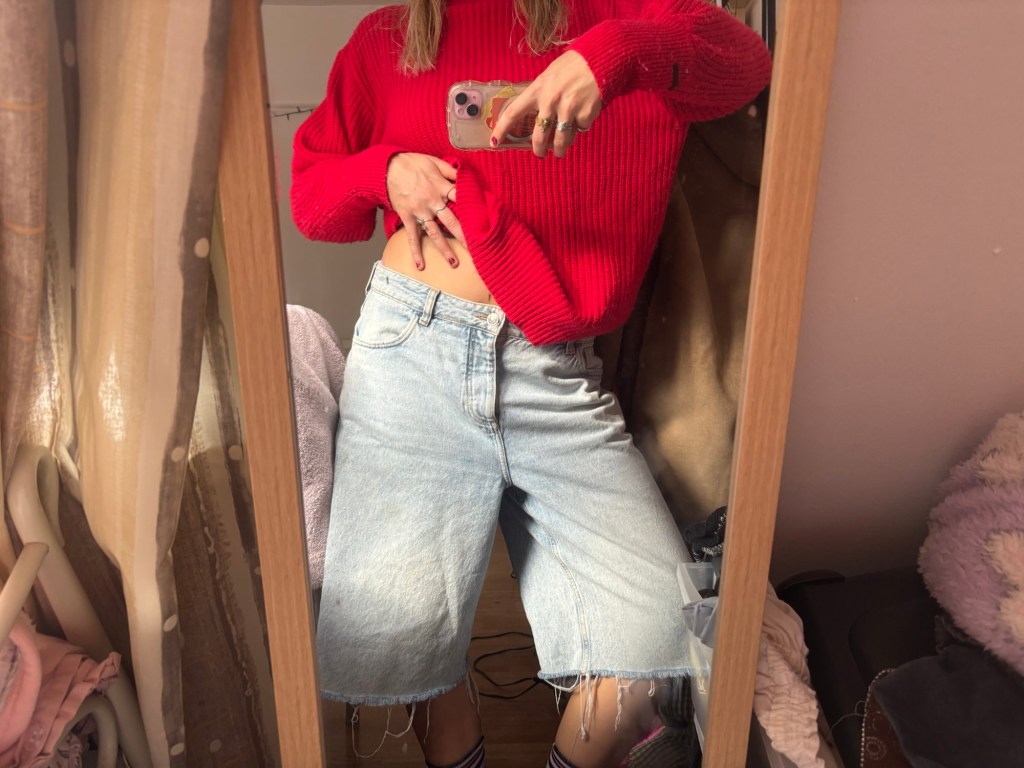
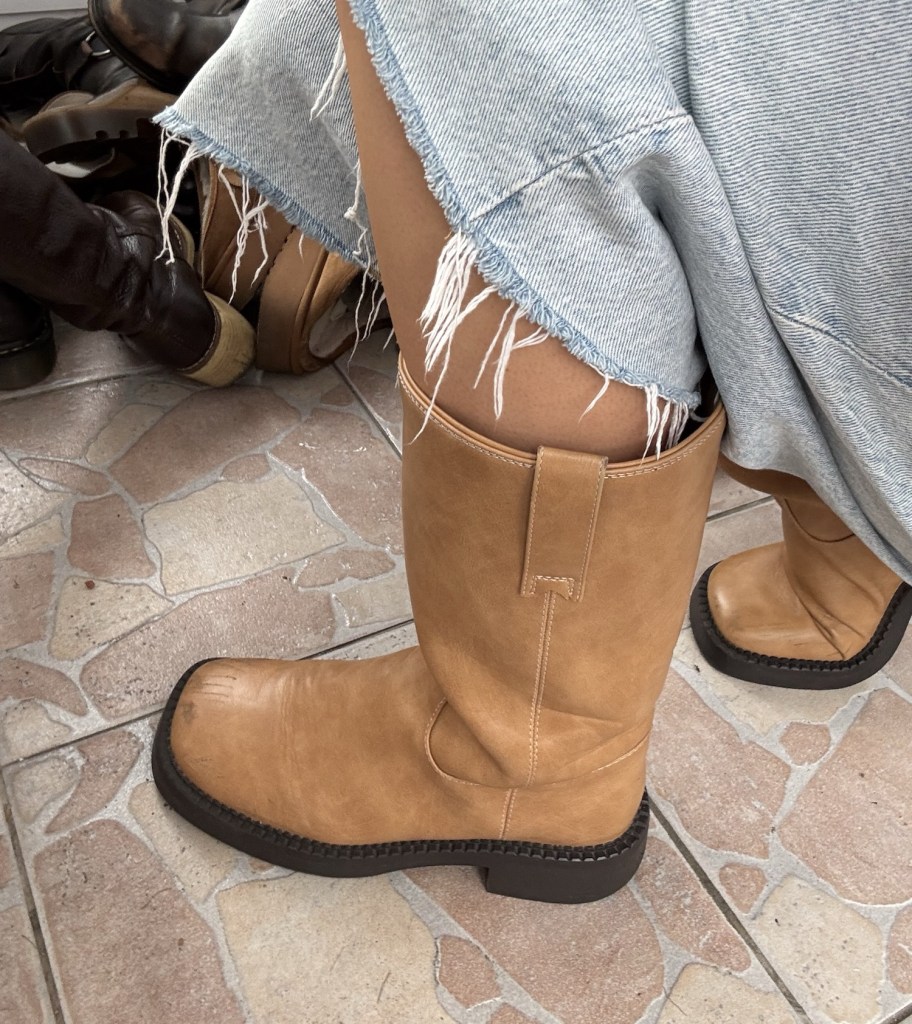
For my seminar, I was desperate to not wear jeans, but as I mentioned in my previous post, I am in a slump styling wise. So I pulled out my jorts. The weather is fairly mild at the moment, and as I frequently cycle to uni, I find myself warmer than I’d expect. I paired my jorts with a baggy but classic red knit jumper. This is something I’d tried last week for my previous blog post but not settled on, but it felt right for Thursday. I finished this outfit off with my tan boots.

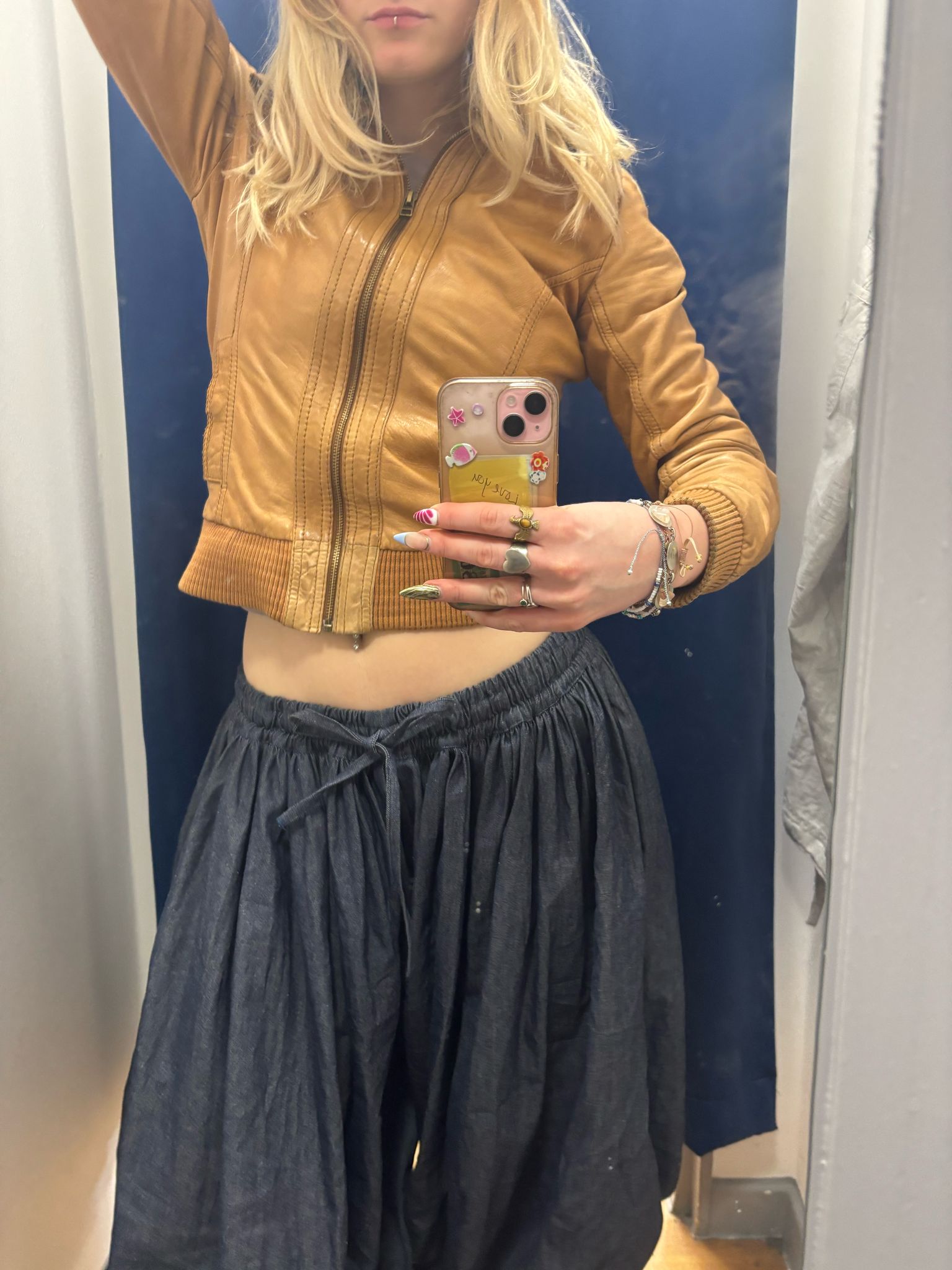
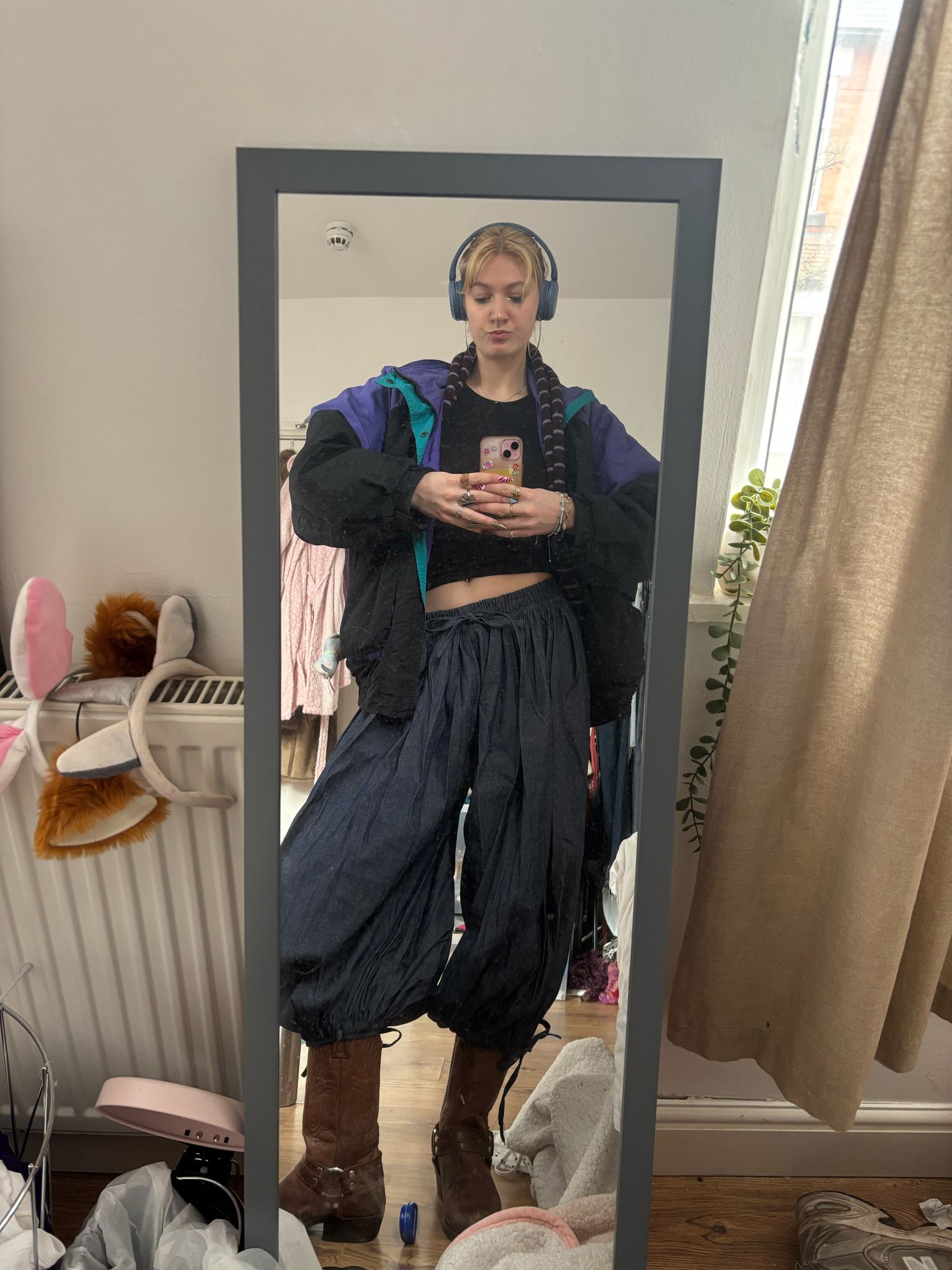
The evening brought the first social of the society I have been a part of since first year. I decided to bring out a favourite of mine: my Arodazi trousers. I wore these with a white stuff purple cami from the 90s, and my vintage velour Disney hoodie. For jewellery, I wore a chunky gold seashell necklace, and some gold starfish earrings. I once again wore my tan boots, and a tan leather jacket to match. This was an outfit that I felt fully myself in.

Day 5: Full uni day

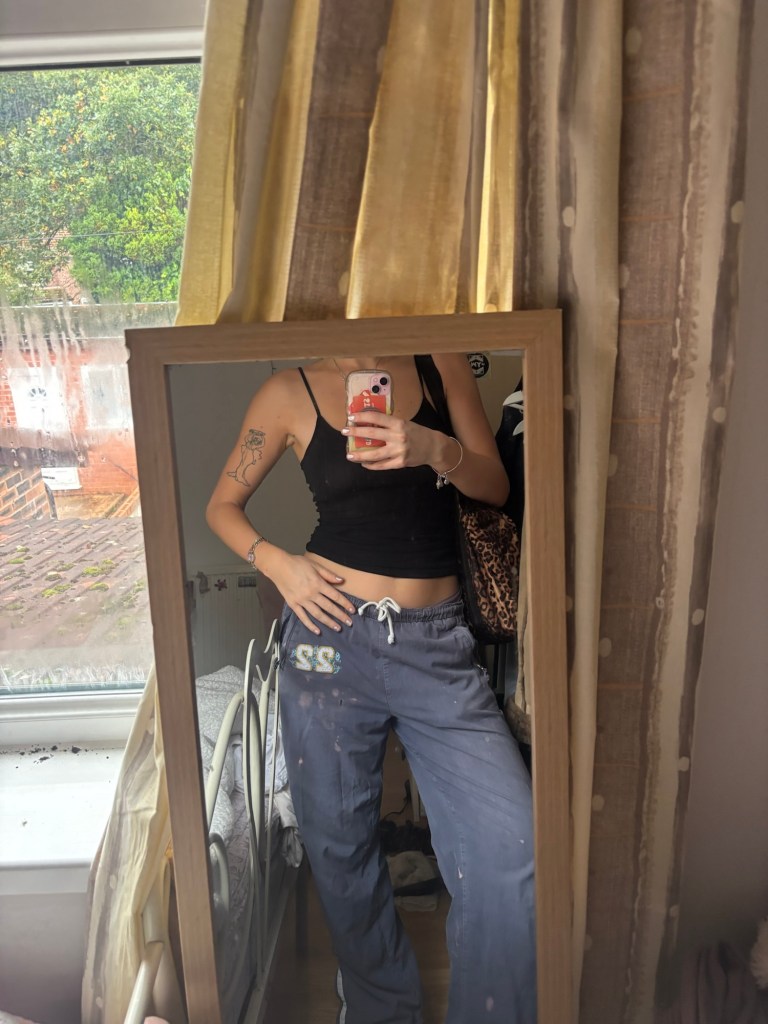
For day 5, the first thought I had while rolling out of bed was “I need to be comfy”. Thursday nights social had left me feeling bit worse for wear, and safe to say I couldn’t face putting on a nice outfit or doing my makeup. I pulled on my mums old Jack Wills joggers and a black vest – perfect. With a jumper and scarf, that was me done for my day at uni.

Final thoughts

I had planned for this to be a longer piece, including the weekend, but the weather forecast is not looking good. So my plans will be a cosy weekend in, probably not changing out of my pyjamas. So I will leave this post here.

Overall, this feels like an accurate Monday–Friday snapshot of my life right now: a balance of work and uni, comfort and play, and experimenting with small details to make everyday outfits a little more fun.

Getting out of my outfit slump

Fashion is about 75% of the media I consume, yet I have found myself in a slump, a rut, a flop, whatever you want to call it for longer than I would like to admit. I recently cut my hours at work to focus on my studies, as my final year begins. This then means my shopping and spending habits need to be dramatically reduced – as in for the most part, stopped completely. So, without further adieu, come along with me as I re-imagine my current wardrobe hoping to alleviate the slump I am in, both stylistically and mentally.

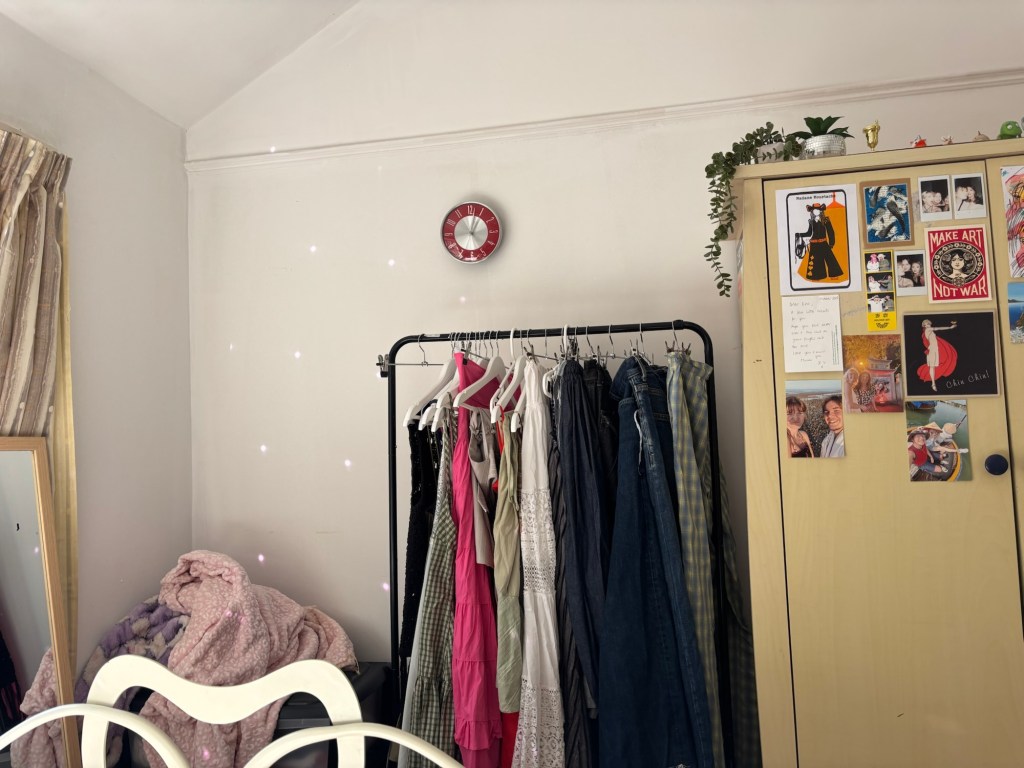
I recently moved into my final year uni house, each year facing the challenge of which clothes to leave at home and which to bring. This usually results in my packing an obscene amount of bags, leaving a handful of clothes at home. And you’d think that I’d never feel stuck with the amount of shoes, tops, bags, and coats I am extremely privileged to own. You’d be wrong.

As a Fashion Buying and Merchandising student, I have found that through my studies, the joy that once came from picking a good outfit, styling it, and wearing it regardless of the occasion has dulled. The pressure of writing reports, building mock ranges, and spending hours with my nose in multiple WGSN forecasts takes its toll on my love for fashion, so my aim at the moment is to bring a sense of play back into my day-to-day outfits. Currently, I seem to be leaning towards comfort, much more likely to grab jogging bottoms over my trusty go-to jeans. Then in turn, don’t feel as confident when I leave the house. So, I thought about the silhouettes and styles I am enjoying at the moment, and considered how I could combine the comfort I am craving, with clothes that make me feel good.

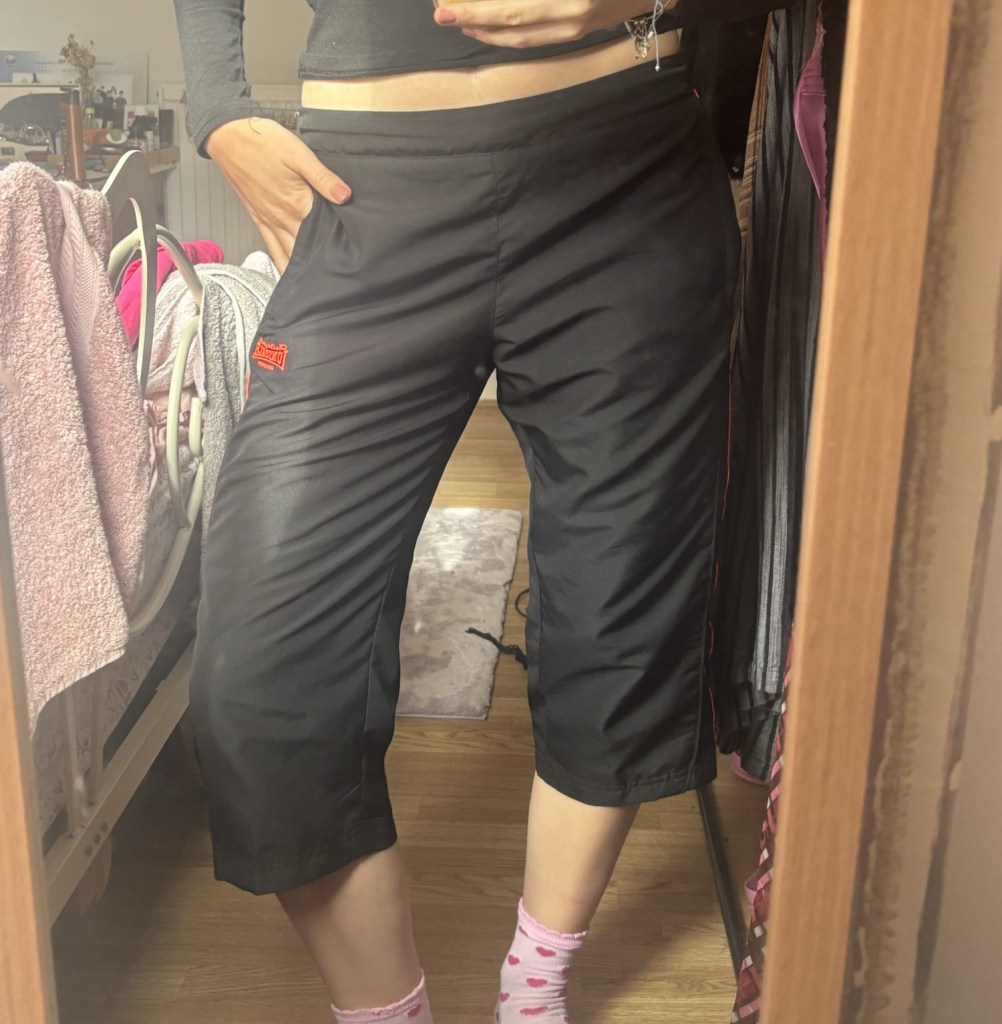
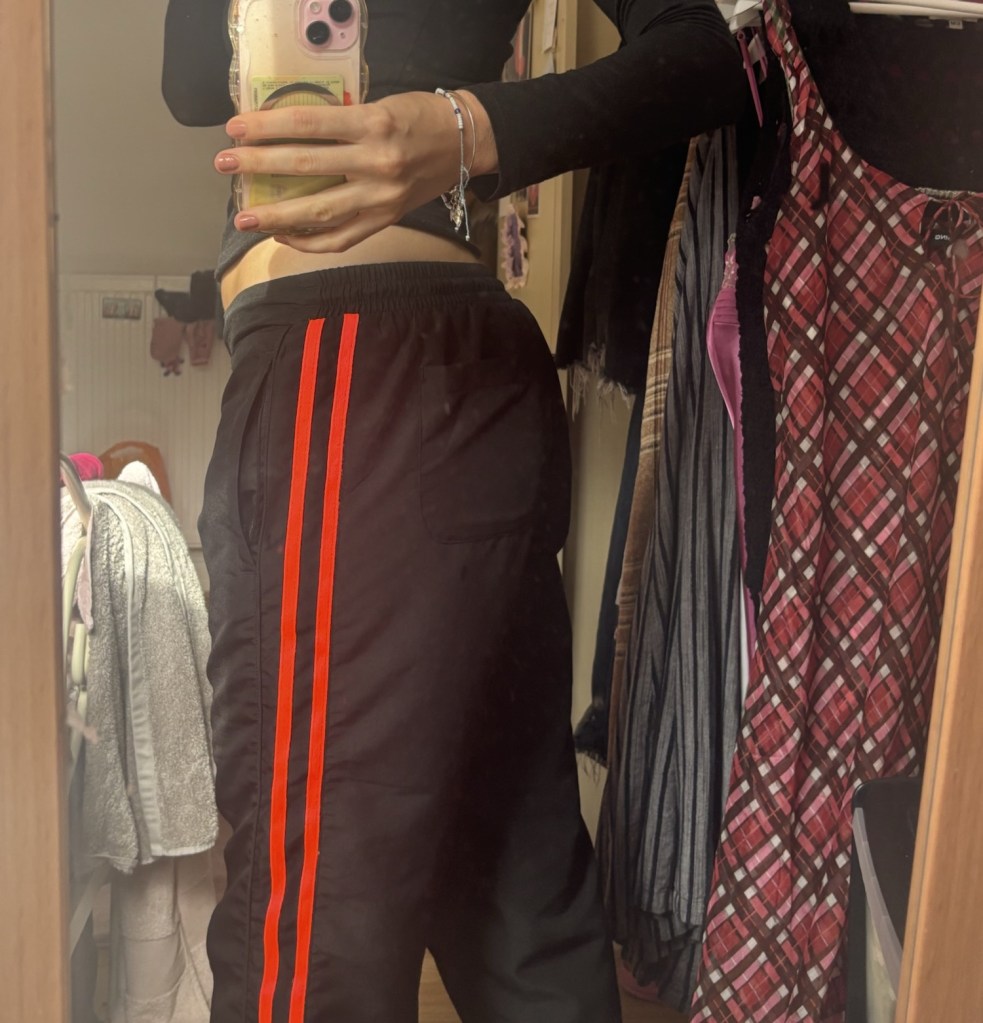
The first purchase that supported this was my Lonsdale cropped jogging bottoms, which I found on Vinted for £7. These I absolutely LOVE, they fit perfectly, they are comfy, and the pop of colour on the stripes adds an element of fun. I find they complement my style well, pairing easily with the belly button-cut off tops I frequent. Luckily, the September weather is fairly mild, so I find that with a hoodie or a coat, I am not cold.

The Scarf-as-Belt Experiment

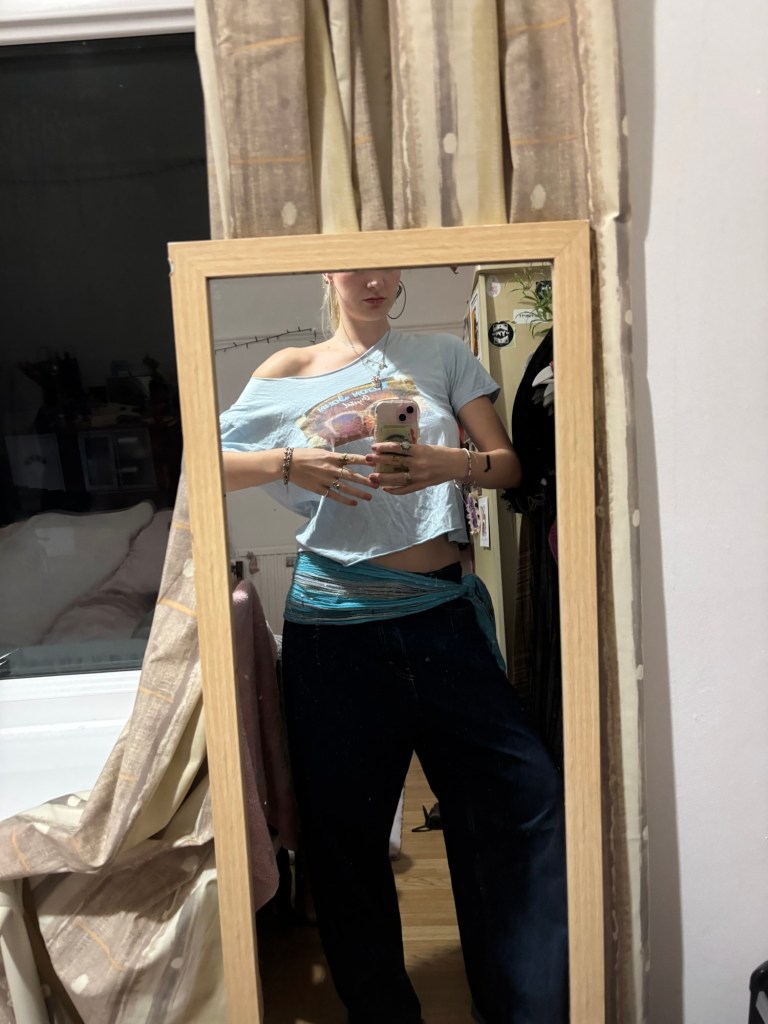
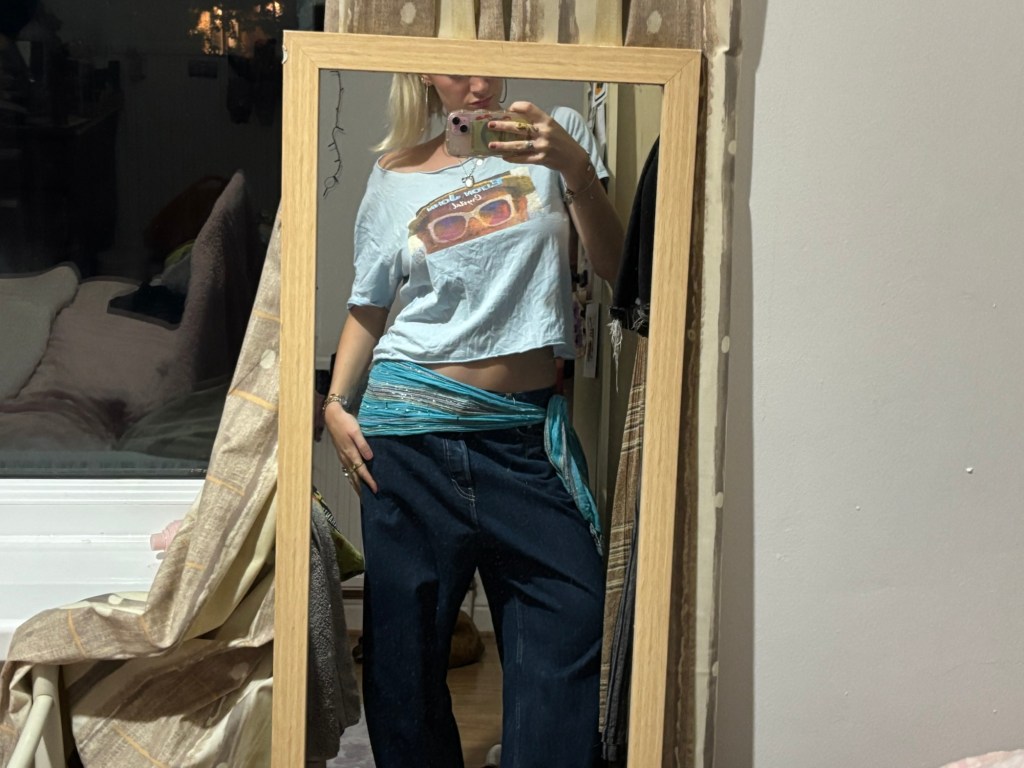
For day 1 of trying to get out of my outfit slump, I wanted to start simple. I’ve recently been seeing people wearing scarfs, lace headbands and other long strips of materials as belts and wanted to try this for myself. And I must say, I was a fan. I found it’s a simple yet effective way to elevate an outfit. I will be wearing this again!

Drinks Night with a Little Help

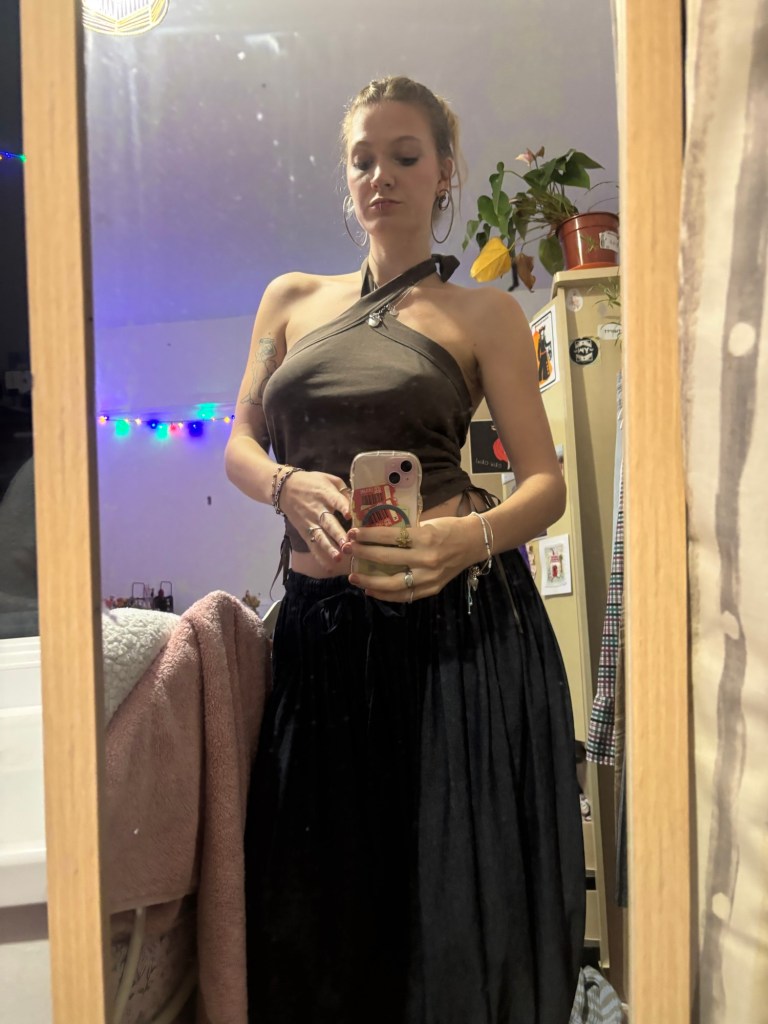
For day 2, the focus of my outfit was my hair. I am currently growing out my fringe, so pulled it back into two small braids with a messy high bun. For my outfit, I enlisted the help of a friend to style me when I was feeling VERY unsure what to wear for a chill drinks night. We landed on my trusty Arodazi trousers, with a halter neck top from the 90s that I’d forgotten I owned. I paired this with a red cardi, some big hoops, and my current favourite boots. And of course, a big coat and scarf as autumn is upon us.

The Work Uniform Interlude

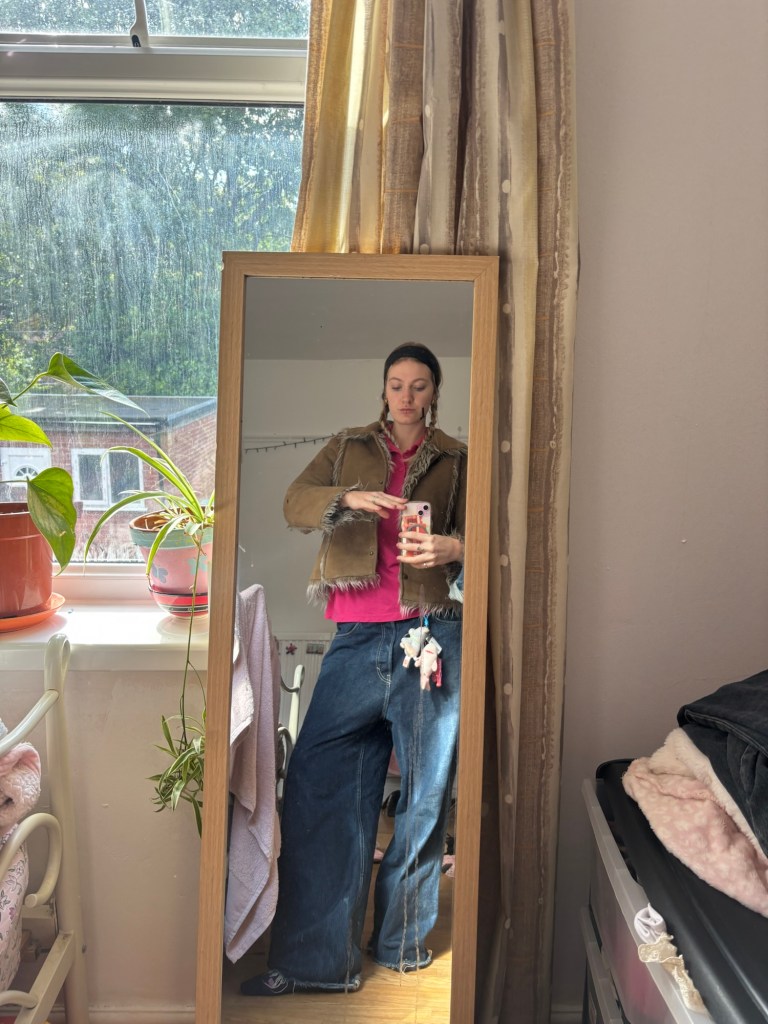
Since then I have unfortunately been working, and let me tell you, no outfit is elevated by the bright pink badly fitting T-shirt and hoodie I have for work. However, my efforts have not faded, and when university starts, I am to curate a perfect blend of comfortable and yet very – me – outfits.

Back to Uni: Comfy but Thoughtful

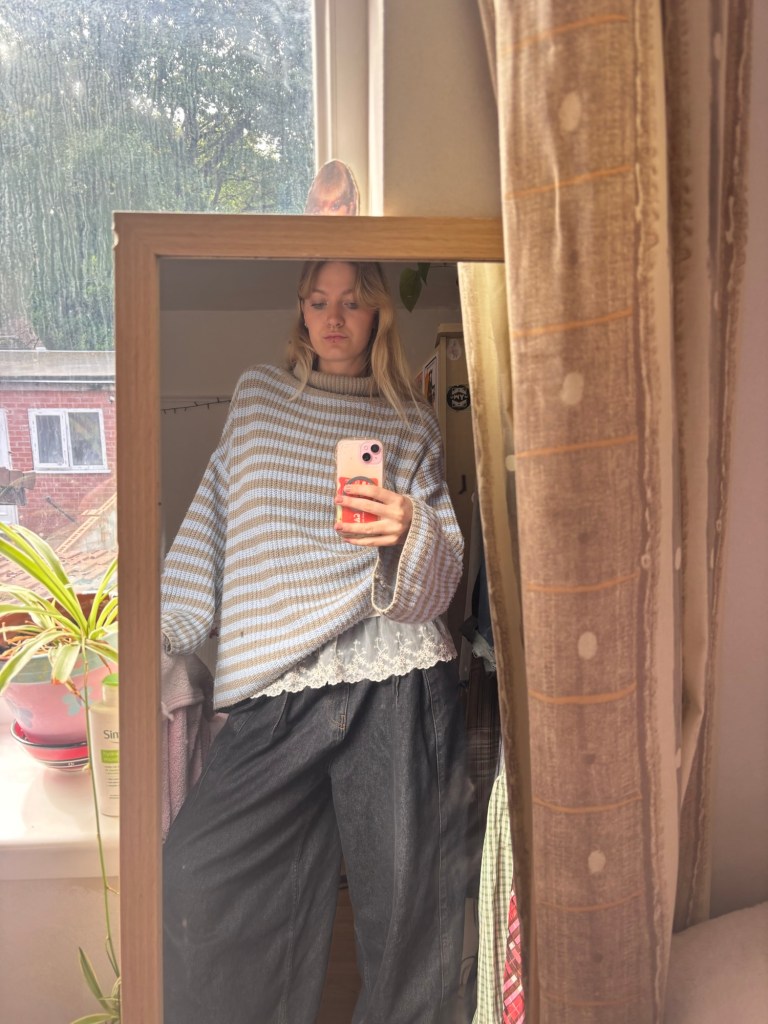
For my first official day back at uni, I wanted something comfy with an extra element. I really wanted the lace section on the bottom of my top to be noticeable so I tried two jumpers, with the pink being a better length for the peekaboo effect. So I went with this.

Recent Finds: A Little Nostalgia

Finally, my most recent purchase. This Disney velour hoodie I got from Vinted. Now I am not a Disney adult, but I saw this while browsing for a 90s zip up and couldn’t resist.

Final thoughts

This little project is less about “perfect outfits” and more about reconnecting with why I love fashion in the first place. By re-styling what I already own, leaning into comfort, and experimenting with small details, I’m slowly shaking off the slump. With a new term ahead, my aim is simple: to dress in a way that feels like me, joyful, creative, and real.

Wuthering Heights- a piece on the ruin of historical fashion

Recently I have been seeing a myriad of photos of Emmerald Fennels’ Wuthering Heights. Now, I won’t speak on the interesting casting choices as that is not my area of expertise. However, when it comes to costume, this is my niche.

So without further adieu,

When Historical Fashion Goes Rogue

Emerald Fennell’s hotly anticipated Wuthering Heights adaptation, starring Margot Robbie and Jacob Elordi, has sparked heated debate (understandably in my opinion). While artistic reinterpretation can bring fresh insight, the costuming choices, particularly Robbie’s wedding dress, risk clashing with the period’s aesthetics and diluting the story’s emotional backdrop.

1. The White Wedding Dress: A Bold Anachronism

Robbie’s gown, with its off-the-shoulder cut, poufy sleeves, ball‑gown silhouette, cathedral veil, tiara, and bouquet, leans heavily into fantasy rather than Georgian-era realism. While the dress itself is beautiful, it is the wrong styling entirely.

Color issue: White bridal gowns didn’t become fashionable until after Queen Victoria’s 1840 marriage (decades after Wuthering Heights is set). As one critic put it, “Wuthering Heights is set in the Georgian Era—no one was wearing white dresses for a wedding.”  And much like Little Women (I film I dearly love), the silhouettes are mismatched. Georgian fashion favored flowing, empire waists, not voluminous ball-gown styles resembling Princess Diana or the 1980s.

2. Missing Petticoats & Emerging Hoops

Fans on Reddit noted the structural flaws:

“I really dislike the dress 😦 Hoops protrude through the skirt too much… Wuthering Heights is all about the atmosphere of desolate moorland… The dress doesn’t channel the character at all.” 

“WHERE are her PETTICOATS?” 

These are more than nitpicks, they’re key to period authenticity.

3. Casting & Character Continuity

The costume choices don’t exist in isolation—they tie into broader concerns about character accuracy:

Age gap: Robbie is mid-30s, whereas Cathy is meant to be a teenager (around 17–18)  . Character image: Cathy is described with brown hair and a fierce, rustic spirit—Robbie’s blonde, pristine, “iPhone face” veers modern and glossy.

Together, these choices risk weakening Brontë’s iconic image of a wild, windswept Yorkshire heroine.

4. Aesthetic vs. Authenticity: Fennell’s Vision

Casting director Kharmel Cochrane rebuts that “you really don’t need to be accurate… It’s just a book… it’s all art”  .

This aligns with Fennell’s established cinematic style, evident in Saltburn and Promising Young Woman, where visual spectacle often takes precedence over faithful period recreation  .

For some, this signals a bold reimagining; for others, it feels like crossing a line trading historical immersion for glamour.

Conclusion: Where’s the Balance?

Emerald Fennell’s Wuthering Heights is shaping up to be visually opulent but the lavish costumes, especially Cathy’s wedding ensemble, appear to clash with the story’s deepest emotional currents. White gowns, hoop skirts, blonde hair, and CGI-worthy purity may dazzle, but they risk overshadowing Brontë’s raw, elemental world.

Final thoughts: Reimagining classics is worthwhile but faith to period and character isn’t optional. If Fennell leans fully into fantasy, we might as well expect a different story entirely.

Sources: https://www.vogue.com/article/margot-robbie-wuthering-heights-wedding-dress? , https://www.dailydot.com/culture/emerald-fennell-wuthering-heights-controversy/?, Reddit

Women in the workplace

After a weekend away, I checked my emails this morning to a Drapers editor’s pick. The overarching theme of this week’s was sexual harassment in the work place. While I intend this blog to be mainly fun and carefree, I would be naive to waste the opportunity to use this platform I am building to speak on important matters. Reading these articles as a woman planning on entering this industry is a sobering experience. And I can’t help but feel frustration with the failure to protect and respect women in 2025. Have we really come as far as we say?

The theme of this weeks Drapers Editor’s pick comes after Primark CEO Paul Marchant’s resignation with immediate effect after an investigation into his conduct in the workplace (Weston, 2025). As well as this, the week’s must-reads included Winifred Okocha’s report on the possibility of Harrods’ dishing out up to £300,000 in compensation due to harassment at the hands of previous owner Mohammed Al Fayed. It’s a scary thought, seeing how many men in power abuse it; creating fewer and fewer safe spaces for women.

A question I have found myself repeatedly asking is why aren’t there more women in charge in this industry? The fashion industry is marketed and aimed at women and girls, so why aren’t we the ones that the top? In 2024, out of the 30 top luxury brands in the Vogue Business Index, only 7 of the creative director roles were held by women. That’s a measley 23.3%. And yet, when these roles are female led, the improvement for business is significant. For example, Dior sales have more than quadrupled since 2016, when Grazia Chuiri became the artistic director. How come the people who will actually wear the clothes aren’t allowed to design them?

2022 saw the release of reports about the abuse and maltreatment of factory workers in Myanmar, with the Business and Human Rights Resource Centre estimating 90% of these workers are women. This isn’t an issue in Myanmar alone, globally almost 60% of garment workers are women. Women are more likely to be in lower level positions than men often due to care and domestic responsibilities. In these roles, they are met with horrific working conditions, minimal pay, no access to social security and sometimes no maternity leave; basic human rights. The inherent misogyny and abuse runs all through the supply chain.

However, it’s encouraging to note that there has been progress since 2020, with the percentage of women holding board roles increasing to 38%. As well as this, in the past year, several women were appointed as CEOs, including Paula Nickolds at The White Company, Julia Goddard at Harvey Nichols, Laura Brown at Aspinal of London, Catherine Nunn at Lakeland, Fran Millar at Rapha Racing, and Sonia Lopez Delgado at Pandora UK. While there’s still work to be done, this growth is a positive step forward, showing that efforts toward greater gender diversity and inclusion are starting to make an impact.

References: https://www.voguebusiness.com/story/fashion/what-would-fashion-look-like-if-women-were-in-charge Drapers – Harrods to pay £300,00 Drapers – Primark CEO quits Racism, gender imbalance and inclusive stores: key Drapers investigations from 2024 Drapers – Why fashion is still failing its female supply chain workforce Drapers investigates: driving female leadership in fashion

A Closet Full of Dreams (and designer shoes)

The other week, my friends and I finally caved—we started watching Sex and the City. As a group of 20-year-old women, we were instantly hooked. We’d seen the clips, the edits, the iconic pieces, and after much deliberation (and a NowTV subscription fee), we pressed play. Hours later, after absorbing Carrie Bradshaw’s musings on love, life, and Manolos, I woke up feeling inspired. If she can write about her world, why can’t I?

So, welcome to Wardrobe Diaries, my space to talk about all things fashion. Growing up, I dreamed of becoming a designer, but as I got older, I realized something I might love even more than making clothes—talking about them. Now, my days revolve around profit margins, trend forecasting, and keeping up with everything happening in the industry. And here, I get to share it all with you.

I decided to start off my blog and writing career detailing some of my current favourite pieces both in my wardrobe (my go-to’s), and my ever growing wish list. An all time favourite ever since they entered my closet 3 years ago are my cowboy boots, if you know me, you know my boots. These are a staple, and my pair were painstakingly chosen after hours of Ebay searches, now worn in to perfection, completed with the right sole missing from years of wear.

Cowboy boots

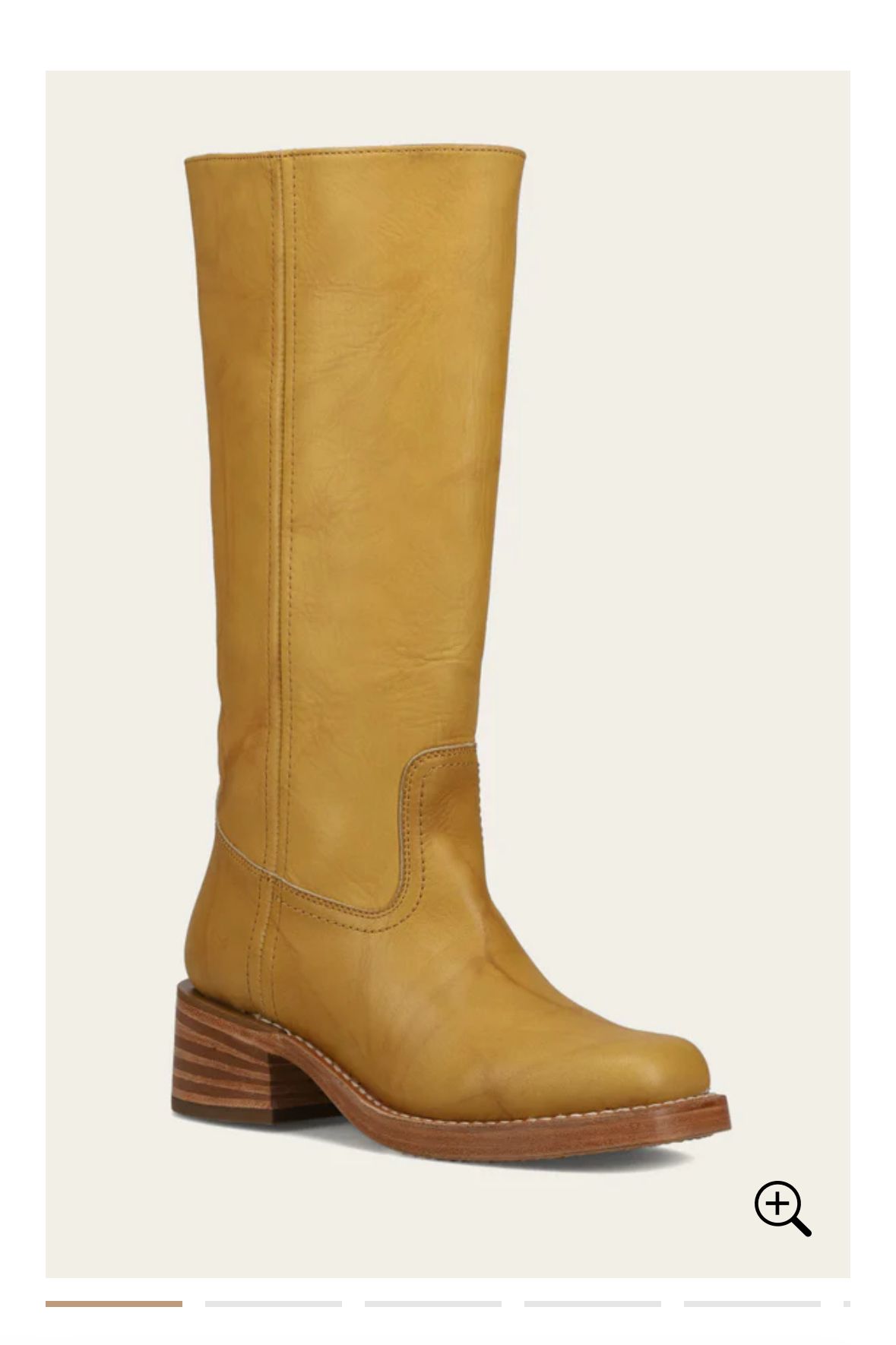
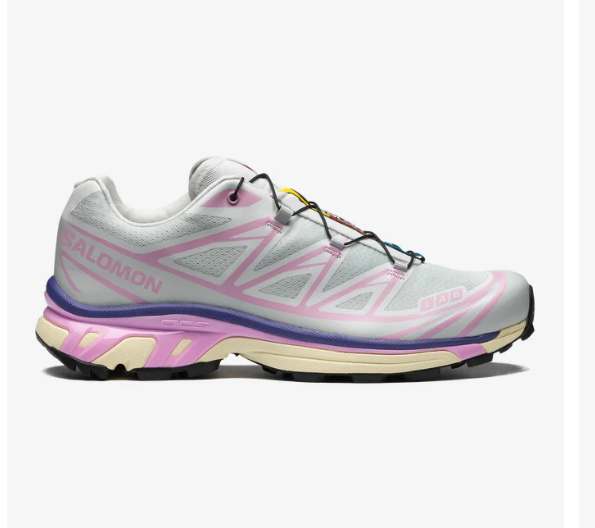
One of the main items on my wish list are Frye boots, in particular these tan pull on boots. And currently, I am simultaneously dreaming of stomping around donning these, and desperately searching for a dupe. Through my endless daydreaming of the campus boot, I believe I may have found a -slightly- more affordable option: the Schuh Damari Pull on, in Tan. These are priced at £95, which is significantly cheaper than the Frye Company, but still steep on a student budget. This is closely followed by Salomons, an easy, comfy everyday piece that elevates any outfit. This brand is very popular at the moment, with Haley Helms publishing a piece on the Best Salomon Shoes of 2025 (Women’s health), saying their favourite is the Salomon XT-6 Trail Running Shoes style, which have gained popularity for their unique blend of functionality and making them a versatile addition to any wardrobe.

I pair these with my current denim rotation, which prominently features the ASOS Collusion baggy pleated jeans, known for their relaxed fit and contemporary cut. Alongside these, my Arodazi Denim Oshi Capris have become a staple in my wardrobe, an item that has barely left my body since purchase due to their versatility and exceptional comfort. Finally, my trusty Weekday Astro jeans round out this favorite trio, providing a reliable option for almost any occasion. As with most people, a perfect blend of comfort and style is not just desired but necessary in everyday life, and these three pieces have proven to be some of the most comfortable denim items I’ve worn, effortlessly elevating both casual and dressed-up looks while allowing me to move freely throughout my day.

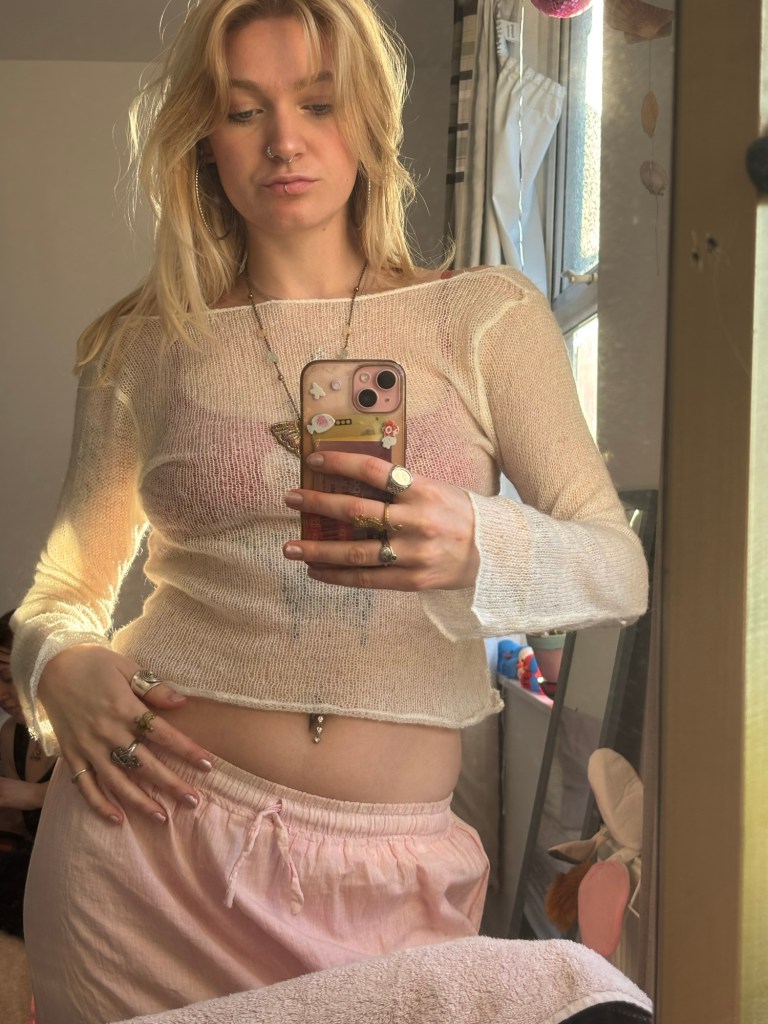
One of my favourite recent purchases is this sheer knit top I got off Vinted. This was a £1.50 buy, with second hand shopping proving time and time again you don’t need to be dishing out a lot of money to dress well.

Sheer knit top paired with second hand pink skirt
Same top paired with second hand pinstripe trousers.

References:

https://www.womenshealthmag.com/style/g63908880/best-salomon-shoes/?utm_source=chatgpt.com

https://www.schuh.co.uk/womens/schuh-damari-pull-on-tan-boots/1590016220/?utm_source=google&utm_medium=surfaces-across-google&utm_campaign=organic-shopping&gad_source=1&gbraid=0AAAAAC87GnqLrcayKKf_wq7WKybhlwNo5